

Views: 0 Author: Site Editor Publish Time: 2026-10-21 Origin: Site


The mechanical lever known as the clutch fork serves an indispensable role in manual transmissions. It directly translates hydraulic pressure or cable tension into the physical disengagement of the clutch assembly. When a driver presses the pedal, this lever performs the heavy lifting required to separate the engine from the drivetrain. Technicians often overlook this seemingly basic component when troubleshooting complex drivetrain issues. However, a compromised fork introduces excessive play and significantly accelerates bearing wear. This oversight routinely causes expensive, unnecessary transmission teardowns when mechanics misdiagnose the issue as a failing master or slave cylinder. Understanding its precise mechanics saves operations both time and excessive labor. We know heavy-duty commercial fleets cannot afford avoidable mechanical failures. A grounded truck disrupts supply chains and erodes operational profitability. This comprehensive guide provides fleet managers and technicians a clear framework for diagnosing component wear and evaluating reliable replacement parts. You will learn how to accurately identify failure symptoms, select durable heavy-duty materials, and implement proven maintenance best practices. We aim to help you mitigate transmission downtime effectively.
A clutch fork acts as the intermediary lever between the clutch slave cylinder and the truck clutch release bearing.
Excessive "play" or looseness often indicates pivot ball wear or metal fatigue, not just normal operational tolerance.
Selecting a replacement clutch fork for heavy duty trucks requires prioritizing forged over stamped materials to withstand high torque loads.
Replacing the fork without concurrently inspecting and replacing the pivot stud and release bearing significantly increases the risk of recurrent failure.
Every time you press the clutch pedal, you initiate a precise mechanical sequence. The fork pivots on a fixed fulcrum, usually a stationary pivot ball or threaded stud. It acts as a mechanical lever to push directly against the truck clutch release bearing. This physical action compresses the heavy diaphragm springs or coil springs of the pressure plate. Consequently, it disconnects engine torque from the transmission input shaft. This momentary disconnection allows the driver to shift gears smoothly.
The structural integrity of this mechanical lever dictates how evenly it applies pressure. When the component remains perfectly straight, it pushes the bearing squarely against the spring fingers. If the lever bends even slightly, it distributes force unevenly across the contact surface. Uneven pressure quickly leads to premature bearing failure and abnormal friction disc wear. You will also notice severe clutch chatter or shuddering during vehicle launch.
Furthermore, this specific component never operates in isolation. Its performance relies entirely on the precise geometry of the fixed pivot point. It also depends heavily on the accurate travel distance of the slave cylinder pushrod. Any deviation in these surrounding parts severely degrades shifting performance. If the pivot ball wears down, the lever geometry shifts, reducing the overall throw. This reduction means the system can no longer fully disengage the clutch disc. Understanding these dependencies prevents mechanics from replacing the wrong parts.
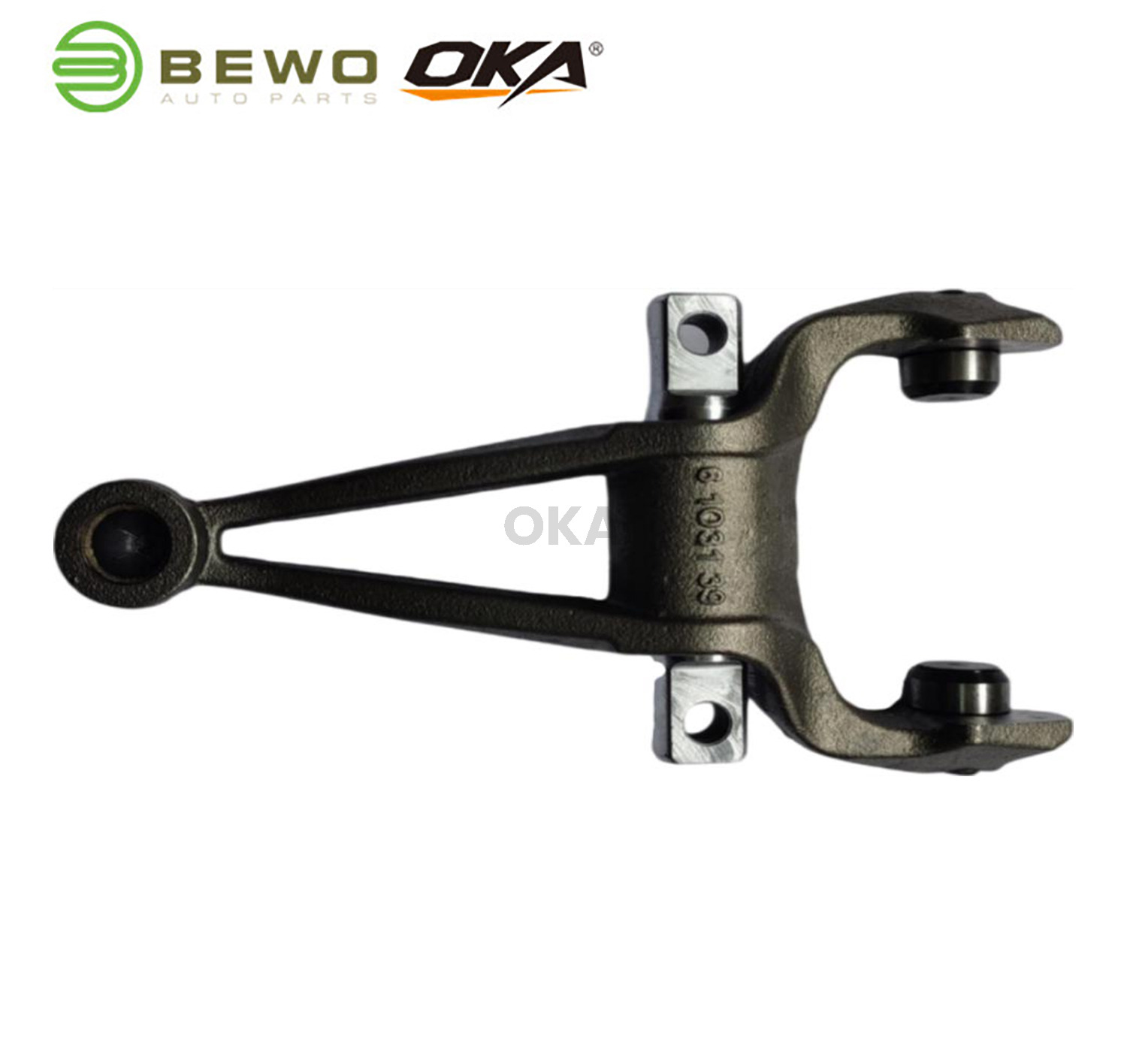
Technicians frequently ask how much looseness is acceptable in these mechanical linkages. You must distinguish carefully between normal mechanical clearance and symptomatic wear. A healthy system exhibits minimal lateral movement when un-tensioned. Engineers design a small amount of clearance to prevent constant bearing contact. However, excessive back-and-forth play strongly indicates severe pivot-point wear. This unwanted looseness points directly to metal fatigue or a flattened pivot ball, rather than standard operational tolerance.
When diagnosing potential failures in the service bay, watch out for these common symptoms:
Spongy or sinking pedal: Mechanics often misdiagnose this specific feeling as a failing master or slave cylinder. A cracked lever absorbs hydraulic travel by flexing, causing an identical soft pedal feel.
Difficulty engaging gears: Gear grinding indicates a bent lever. A distorted part simply cannot achieve the full bearing travel required to release the friction disc entirely.
Audible squeaking or grinding: A misaligned lever often rubs directly against the transmission bell housing. It may also scrape the bearing collar abnormally during actuation.
Misdiagnosing these mechanical symptoms carries severe financial consequences for fleet operations. Shops frequently waste countless labor hours replacing perfectly functional hydraulic components. Mechanics bleed the fluid repeatedly, hoping to restore pedal pressure. When the root cause remains a micro-fractured or bent lever, the original shifting problem persists. You must verify all mechanical linkages physically before assuming a hydraulic failure. Dropping a transmission twice to fix a single problem ruins shop efficiency.
Commercial fleets push their drivetrain components to their absolute mechanical limits daily. A clutch fork for heavy duty trucks withstands exponentially higher actuation forces. Standard passenger vehicles operate under much lighter loads and rarely see maximum capacity. Heavy commercial trucks require massive pressure plate spring tension to hold extreme engine torque. This constant mechanical stress accelerates metal fatigue significantly over time. Heat cycling from the transmission also weakens the metal structure gradually.
You must perform rigorous visual and dimensional inspections during any scheduled maintenance. First, thoroughly clean the part to remove old grease and clutch dust. Check the fulcrum socket carefully for hairline stress fractures. Use a bright shop light and a magnifying glass to spot early cracking. Next, use digital calipers to measure the wear pads. These are the specific contact points interacting directly with the release assembly. Look closely for deep grooving, galling, or asymmetrical wear patterns. Uneven wear pads mean the part can no longer push the bearing squarely.
Consider these mechanical levers as standard wear items within commercial trucking fleets. We strongly recommend replacing them proactively during any standard clutch overhaul. This preventative measure drastically reduces the risk of future roadside breakdowns. Preemptive replacement ensures maximum powertrain reliability over the vehicle's lifespan. By treating this part as a consumable, you protect the much larger investment of the complete transmission system.
Selecting the right replacement part determines the overall longevity of your repair. Material construction remains the most critical factor when evaluating different vendor options. Stamped steel construction works adequately for light-duty passenger applications. However, heavy-duty operational longevity demands forged steel or reinforced cast designs. The forging process aligns the metal grain structure under immense pressure. This structural alignment adds immense strength against bending and torsional twisting.
Next, evaluate the rigorous metallurgical treatment of the replacement component. Manufacturers must apply specific wear-surface hardening to the most critical contact areas. Inspect the bearing contact points and the pivot socket carefully. Look for induction-hardened or case-hardened wear pads. These hardened surfaces effectively resist galling and metal transfer under extreme actuation pressure.
When weighing OEM components against aftermarket options, exact dimensional matching is absolutely non-negotiable. Even a single millimeter of variance at the pivot socket alters everything. It changes the mechanical geometry of the pedal engagement entirely. This misalignment causes immediate binding or prevents full clutch disengagement. Always require transparent warranty terms and clear manufacturing standards from your vendors. Ask them for specific load-rating specifications before purchasing a new clutch fork.
Below is a detailed comparison to guide your heavy-duty procurement strategy effectively.
Construction Type | Application Suitability | Durability & Wear Resistance | Risk of Deflection (Bending) |
|---|---|---|---|
Stamped Steel | Light-duty passenger vehicles and small vans | Moderate; prone to wear over long mileage | High under heavy torque or upgraded springs |
Forged Steel | Commercial haulers and heavy-duty trucks | Excellent; deeply resists metal fatigue and cracking | Very low; maintains strict operational geometry |
Reinforced Cast | Medium to heavy-duty fleet applications | High; features induction-hardened contact pads | Low; provides rigid and predictable actuation |
Never purchase replacement levers based solely on the lowest price point. Substandard aftermarket parts often use inferior steel alloys that bend easily under load. Always verify the replacement matches the exact curvature and pivot depth of the original factory unit.
Professional drivetrain technicians strictly adhere to the "while you are in there" rule. We strongly advocate against replacing just the lever alone during a teardown. You must standardize the replacement of surrounding wear items simultaneously. Always install a new release assembly, a fresh pilot bearing, and a new pivot stud. Doing so completely resets the mechanical wear cycle for the entire bell housing environment. Skipping these cheap components practically guarantees secondary failures down the road.
Proper lubrication determines exactly how long the new components will survive under load. You must apply a high-temperature, specific-viscosity grease to the pivot socket. Apply it very sparingly to the fork-to-bearing contact surfaces as well. Moly-based greases often provide the best high-pressure protection for these metal-to-metal contacts. Be highly precise with your grease application volume. Over-lubrication risks flinging excess grease directly onto the organic friction disc, ruining the clutch completely. Conversely, under-lubrication causes immediate mechanical binding, squeaking, and rapid metal transfer.
Before returning the heavy-duty vehicle to active fleet service, execute a strict validation process. Skipping post-installation tests leads to dangerous drivability issues.
Check the mechanical release travel manually to ensure full engagement and clean disengagement.
Verify all hydraulic bleeds to confirm absolutely no air remains in the master or slave cylinders.
Inspect the firewall and pedal assembly for any signs of flexing or metal fatigue.
Conduct a rigorous road test to confirm smooth engagement without any shuddering, slipping, or grinding.
Mechanics often forget to inspect the retaining spring clip holding the lever to the pivot ball. If this small spring clip loses its tension, the lever will detach partially during operation. Always replace the retaining spring clip when installing a new mechanical lever.
The mechanical actuation lever holds immense strategic importance in overall powertrain reliability. It serves as the vital, physical bridge between hydraulic driver input and mechanical disc separation. Ignoring its physical condition inevitably leads to severe operational disruptions and compromised shifting performance. A simple fracture in this metal component paralyzes an entire commercial vehicle instantly.
You must evaluate heavy-duty replacements based on strict material durability and proper forging techniques. Adhering strictly to OEM dimensional geometry prevents catastrophic secondary transmission failures. Forged materials and heat-treated wear surfaces guarantee reliable performance under extreme commercial loads. They handle the massive spring pressures required by modern diesel engines effortlessly.
Do not let a simple mechanical lever cause an incredibly expensive fleet breakdown. Standardize your shop inspection protocols immediately to catch metal fatigue early. Make precise lever and bearing inspections a mandatory step during all routine transmission teardowns. Train your mechanics to look beyond the hydraulic cylinders when diagnosing spongy pedals. Proactive maintenance and thorough visual inspections always defeat reactive, emergency repairs.
A: Slight lateral play when un-tensioned can be entirely normal. Mechanics expect a tiny amount of clearance for movement. However, excessive back-and-forth play points to a worn pivot ball or a compromised retaining spring. You should inspect the pivot point if the looseness feels sloppy rather than precise.
A: A bent component usually manifests as an inability to fully disengage the clutch. You might experience severe gear grinding when shifting. This occurs even when hydraulic systems are fully bled and functioning optimally. The bent metal simply cannot push the bearing far enough to release the friction disc.
A: For commercial and heavy-duty applications, yes. The immense labor cost of accessing the transmission components far outweighs the low part cost of a preventative replacement. Installing a new lever guarantees proper geometry and resets the wear cycle, preventing a future teardown for a minor part failure.


