

Views: 0 Author: Site Editor Publish Time: 2026-10-17 Origin: Site


Replacing a transmission component requires hours of intensive manual labor. It ties up service bays and frustrates vehicle owners. A single misstep during reassembly forces you to drop the transmission again, instantly erasing any profit margin. You want to avoid this scenario at all costs.
Fleet operators and mechanics face a persistent debate regarding drivetrain maintenance. Should you apply grease to sealed components before installation? Old-school maintenance habits dictate lubricating everything in sight. However, modern sealed units operate under fundamentally different engineering principles. Adding external lubricant to these sealed parts causes premature failure rather than extending their lifespan. Modern assemblies reject traditional heavy-handed greasing techniques.
We will unpack the exact reasons modern sealed components require zero external grease to function correctly. You will discover the hidden dangers of over-lubrication and learn which surrounding parts actually need grease. Read on to master evidence-based installation practices. You can prevent costly rework and keep vehicles running smoothly.
Factory Sealed: A sealed clutch release bearing is lubricated for life; adding grease compromises the seal and voids warranties.
The Contamination Risk: External grease attracts abrasive clutch dust, accelerating wear on the bearing and guide tube.
Targeted Lubrication: Only specific mating surfaces (input shaft splines, pivot forks, guide tubes) require specialized, high-temp lubrication.
Application Matters: Modern plastic-collar passenger bearings and a heavy duty truck clutch bearing have strict, non-negotiable OEM installation tolerances.
Maximizing component lifespan drives every successful repair facility. You want to eliminate the labor costs and vehicle downtime associated with a secondary transmission drop. Every secondary repair directly impacts your bottom line. An OEM clutch release bearing arrives precisely packed and engineered to last the entire lifespan of the clutch assembly. Tinkering with its factory state jeopardizes this durability.
To understand the lubrication rules, we must look at the mechanical forces in play. The bearing handles massive rotational and axial loads during gear shifts.
The driver depresses the clutch pedal inside the cabin.
Hydraulic or mechanical linkage moves the clutch fork.
The fork pushes the bearing forward along the guide tube.
The bearing presses directly against the clutch cover diaphragm spring.
This action relieves pressure on the friction disc, disengaging the drivetrain.
This sequence demands a perfectly smooth interaction between the bearing face and the spinning diaphragm spring.
Older vehicles featured greasable bearing designs. Mechanics used zerk fittings to pump fresh grease into the housing during routine service intervals. While functional, these older designs invited human error. Technicians frequently over-greased the fittings, pushing excess lubricant out of the seals and onto the friction disc.
Modern engineering solved this problem. Manufacturers transitioned to pre-lubricated, sealed units. Factory engineers apply a precisely measured amount of high-temp polyurea or lithium-complex grease during assembly. They encapsulate this grease behind tight rubber or metal shields. This seal keeps the vital lubrication inside while locking out harmful contaminants. Modifying this delicate balance introduces immediate risks to the entire system.
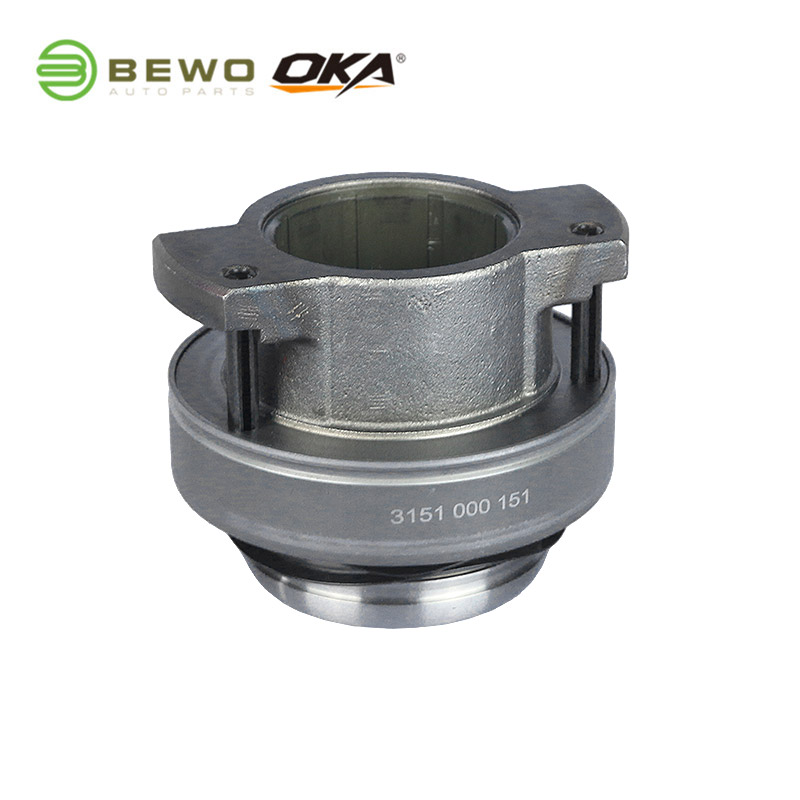
Old habits die hard in automotive repair. Many mechanics still feel tempted to smear a layer of grease across a new bearing before sliding it onto the guide tube. This practice guarantees a shorter operational lifespan.
Excess grease acts like flypaper. The bell housing environment produces massive amounts of dust as the friction disc wears down. This clutch dust contains highly abrasive materials like Kevlar, ceramic, and organic compounds. When you apply grease to the exterior of the bearing, it catches this flying debris.
Grinding paste formation: The mixture of grease and clutch dust creates a thick, abrasive lapping compound.
Accelerated wear: This paste grinds away at the metal or plastic surfaces of the guide tube.
Binding issues: The buildup eventually causes the bearing to stick, leading to a stiff or heavy pedal feel.
Bell housings generate intense heat during normal operation. Stop-and-go traffic pushes these temperatures even higher. Standard chassis grease cannot withstand this environment. If you apply excess external grease, it rapidly liquefies under the high operating temperatures. This liquid grease travels outward due to centrifugal force. It frequently drips onto the friction disc. Even a few drops of oil or grease will ruin a clutch disc, causing catastrophic clutch slip and requiring complete replacement.
Some automotive forums still recommend carefully prying off the factory seal to "repack" the unit with better grease. You must ignore this advice. The rubber seals use a delicate retaining lip to lock into the metal housing. Prying this seal permanently warps the lip. It will never sit flush again. A warped seal allows the factory grease to escape while letting abrasive dust inside. Repacking a modern unit guarantees early failure.
Verdict: Applying grease to the bearing itself, or attempting to repack it, guarantees a shorter operational lifespan. Trust the factory engineering.
Mechanics often confuse greasing the bearing with greasing the surrounding assembly contact points. The bearing requires zero grease. The mating surfaces, however, require specific, highly targeted lubrication protocols.
Component Lubrication Guide
Component | Lubrication Requirement | Approved Material |
|---|---|---|
Sealed Bearing Assembly | None (Do not lubricate) | Factory sealed only |
Input Shaft Splines | Microfilm only | High-temp spline grease |
Guide Tube (Metal Collar) | Very thin coat | High-temp lithium complex |
Guide Tube (Plastic Collar) | Strictly dry | None |
Clutch Fork Pivot Points | Moderate application | High-temp grease |
The transmission input shaft splines need lubrication so the friction disc can slide freely. However, you must apply it sparingly. Use a specialized, high-temp spline grease. Apply a small amount, slide the clutch disc back and forth on the shaft, and then wipe off all visible excess. You only want to leave a microfilm behind. If you see globs of grease, you have applied too much.
The guide tube lubrication depends entirely on OEM specifications. Many older metal-on-metal designs require a very thin coat of approved grease. Conversely, modern passenger vehicles often use plastic-collar bearings. These specific setups usually dictate a strictly dry guide tube. Adding grease here will cause the plastic to degrade. Always consult the service manual.
The pivot ball and the contact points on the clutch fork endure severe metal-on-metal friction. These localized points require high-temp grease to prevent galling. Galling occurs when unlubricated metals fuse and tear under extreme pressure. A dab of proper grease prevents this wear and keeps the pedal feeling smooth.
Different vehicles demand different engineering solutions. You cannot treat a compact commuter car the same way you treat a massive commercial vehicle.
The operational load of a standard passenger car differs wildly from a truck clutch release bearing. Passenger vehicles prioritize smooth engagement and quiet operation. Their parts use lightweight materials and lower spring pressures. Commercial trucks pull heavy loads up steep grades. Their clutch components must withstand massive clamping forces and intense heat cycles.
A heavy duty truck clutch bearing often features a significantly heavier metal housing. It utilizes larger ball bearings and thicker seals to survive a harsh commercial life. Despite this robust construction, it still strictly adheres to sealed-unit rules. You do not grease them. Only legacy or antique agricultural tractors utilize zerk fittings for routine bearing greasing. If you work on modern commercial fleets, leave the grease gun in the toolbox when handling the bearing itself.
Manufacturers increasingly use composite plastic sleeves for throw-out bearings. Plastic offers excellent self-lubricating properties and reduces overall weight. However, plastic reacts poorly to traditional petroleum-based greases. If you apply standard grease to a plastic collar, the material will physically swell. It will bind on the guide tube, degrade structurally, and eventually snap. You must run plastic collars completely dry unless the manufacturer specifically calls for a specialized dry-lube spray.
Successful clutch installations share identical criteria: zero rework, smooth pedal feel, and maximum component lifespan. Achieving this requires discipline during the installation process.
Preparation matters more than lubrication. You must meticulously clean the entire bell housing before installing new parts. Use brake cleaner and wire brushes to remove all old, hardened grease and accumulated friction dust. Pay special attention to the area behind the flywheel and the guide tube base. A pristine environment ensures your new components will not immediately suffer from contamination.
Never install a new bearing onto a worn guide tube. You must visually and physically evaluate the tube for scoring, grooving, or galling. Run your fingernail along the length of the metal. If your nail catches on a ridge, the tube is worn out. If the tube is worn, a new bearing will bind and stutter, regardless of how perfectly you manage the lubrication. Always replace a damaged guide tube during a clutch job.
You get what you pay for in automotive parts. We advise shortlisting high-quality, OEM-equivalent sealed bearings. Avoid cheap aftermarket parts. Budget components often exhibit poor seal tolerances right out of the box. A loose seal will leak factory grease within the first few thousand miles, forcing you into a warranty repair. Invest in premium components to protect your labor time.
Modern drivetrain engineering relies on precision. You must trust the factory seal on your components. Manufacturers design these units to run cleanly and efficiently without external help. Applying grease to a sealed unit only attracts destructive dirt and risks contaminating the friction disc.
Precision regarding where and how much grease you apply to the surrounding contact points serves as the true differentiator in a successful repair. Keep the bearing clean, use microfilm lubrication on the splines, and verify your guide tube condition.
Your next step is simple: always consult the specific vehicle’s service manual for guide-tube lubrication specs and torque requirements before beginning assembly. Adhering to these evidence-based practices will eliminate costly rework and keep your vehicles operating flawlessly.
A: No. Removing the seal compromises its structural integrity. The warped retaining lip will no longer sit flush, leading to rapid grease loss, internal contamination, and guaranteed early failure. Leave the factory seal intact.
A: This is perfectly normal. The factory grease has high viscosity and is packed tightly into the races. It will distribute evenly and operate smoothly once subjected to the heat and heavy rotational load of the engine.
A: Petroleum-based greases chemically react with composite plastics. The grease causes the plastic collar to degrade, swell, and ultimately bind on the guide tube. This results in a stiff, stuck, or erratic clutch pedal.


