

Views: 0 Author: Site Editor Publish Time: 2026-10-24 Origin: Site


You press the accelerator pedal aggressively, engine RPMs spike rapidly, but your car barely accelerates forward. You have officially exceeded your factory drivetrain limits. This frustrating slippage often happens after installing aggressive engine tunes, high-flow bolt-ons, or aftermarket forced induction systems. Your modified engine now produces significantly more torque than the standard components can physically hold. Upgrading becomes mandatory to transfer your newfound power efficiently to the wheels. However, buyers face a tough mechanical dilemma. You must balance the absolute need for higher clamping force against acceptable daily street drivability.
Briefly stated, selecting between a baseline upgrade and a high-performance setup is rarely about peak horsepower numbers. Your final decision depends strictly on engine torque capacity, specific friction materials, and your personal engagement tolerance. In this comprehensive guide, we explore exactly what changes internally during these drivetrain upgrades. You will learn how friction materials evolve, why pedal effort increases, and how to select the optimal hardware for your driving goals.
Torque Over Horsepower: Stage 1 is ideal for mild bolt-ons (+20-30% torque); a stage 2 clutch supports aggressive tunes and moderate forced induction (+40-50% torque).
Material Differences: Stage 1 typically retains organic materials with upgraded pressure plates. Stage 2 introduces carbon-kevlar, ceramic, or segmented disc designs.
Drivability Trade-offs: Stage 2 introduces a heavier pedal feel and potential low-RPM chatter, demanding a more deliberate driving style in stop-and-go traffic.
Installation Matters: Upgrading requires strict adherence to break-in periods and flywheel compatibility to prevent premature failure.
Understanding exactly when factory components fail remains crucial for making informed upgrades. Original Equipment Manufacturer (OEM) setups utilize basic organic friction discs. Engineers build these specific parts for smooth, silent engagement at standard factory power levels. They prioritize commuter comfort over extreme holding power. Once you install an aggressive engine flash, high-flow downpipes, or a larger turbocharger, engine output surges dramatically. This sudden power increase overpowers the mechanical grip of the factory disc.
Many drivers mistakenly focus entirely on horsepower figures. However, torque actually does the physical twisting work. Torque represents the raw rotational force applied directly to the drivetrain. Horsepower acts merely as a mathematical function derived from torque and engine speed. Therefore, peak torque capacity strictly dictates your selection process. Imagine an engine sending 400 lb-ft of torque into a friction disc rated for only 250 lb-ft. The mechanical clamping force simply cannot overcome the rotational violence. The disc slips uncontrollably between the engine flywheel and the pressure plate under heavy load.
Heat represents the ultimate enemy of internal friction materials. Slipping generates immense, localized friction heat rapidly. Spirited mountain driving, drag strip launches, and track days push organic linings far past their safe thermal limits. The bonding resins holding organic materials together begin to cook and break down internally. This extreme heat causes the friction material to glaze. Glazing creates a hard, glassy, frictionless surface on the disc. Once glazed, the disc loses its holding capability entirely. A basic organic disc might survive a slight power bump initially. Repeated hard launches will inevitably destroy it. This specific failure mode necessitates the superior thermal resilience found in upgraded hardware setups.
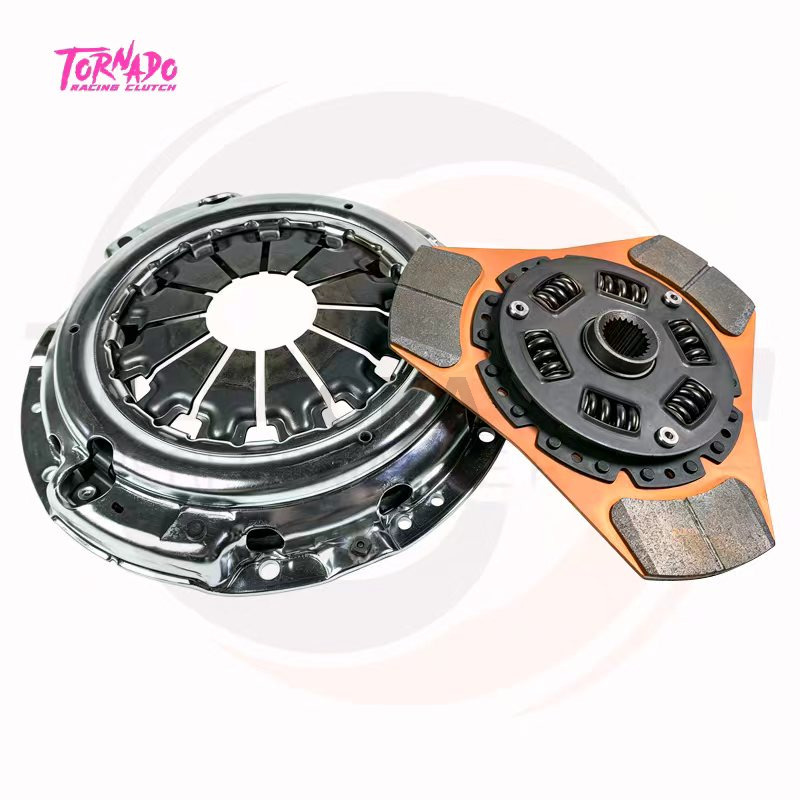
Upgrading your drivetrain requires modifying two primary components physically. You must change the friction disc and the pressure plate assembly. These hardware changes define the performance jump between different stages. We break down these solution categories to explain how they physically manage higher power.
Friction material evolution stands out as the most significant hardware upgrade. First-stage setups typically retain an upgraded organic compound or utilize a steel-backed organic material. These compounds offer incredibly smooth engagement. However, they still suffer from limited overall heat tolerance during extreme use. Upgrading to the next tier introduces highly robust materials. Manufacturers utilize segmented Kevlar, Carbon composites, or mild Ceramic blends. These advanced aerospace-grade compounds boast a significantly higher coefficient of friction (often called Mu). They grab the metal flywheel surfaces much harder. They also resist extreme temperature spikes effectively without failing or glazing.
Disc design structure also shifts dramatically across performance tiers. Most factory and mild upgrade setups use a standard full-face disc. A full-face design provides the absolute maximum surface area. This large contact patch ensures slip-friendly, forgiving engagement for the driver. Heavy-duty track setups often switch to aggressive puck-style configurations, featuring four or six distinct ceramic paddles. Interestingly, a stage 2 sports setup generally retains a full-face or densely segmented single disc design. This specific structural choice prevents the harsh, neck-snapping bite commonly associated with aggressive racing layouts.
Clamping force upgrades rely entirely on the pressure plate housing. High-performance pressure plates feature substantially heavier, stiffer diaphragm springs. These reinforced steel springs physically push the disc harder against the flywheel surface. This direct mechanical leverage change massively increases the total holding capacity. It ensures the friction disc stays completely locked against the flywheel under sudden peak torque loads.
Technical hardware specifications look fantastic on paper or in a catalog. However, they drastically alter your daily driving reality. We must translate these mechanical features into actual behind-the-wheel outcomes. Evaluating these drivability trade-offs helps you avoid purchasing an unmanageable setup.
First, drivers must adapt to a drastically altered bite point. An upgraded stage 2 clutch features a much narrower engagement window. It grabs the flywheel significantly faster than a forgiving factory unit. You cannot simply slip the pedal lazily while taking off from a red light. The heavier setup requires precise footwork. You must execute deliberate rev-matching and intentional pedal release to avoid stalling the engine in traffic.
Second, you will immediately notice a sharp increase in leg effort. Those heavier diaphragm springs located inside the pressure plate actively push back against your left foot. Drivers should expect a 20% to 40% increase in overall pedal stiffness. Driving a high-performance manual vehicle in heavy, stop-and-go commuter traffic can become physically fatiguing. You must prepare for this daily physical trade-off if you plan to commute regularly in your modified vehicle.
Finally, Noise, Vibration, and Harshness (NVH) levels will inevitably rise. We need to transparently address the reality of hardware chatter. High-friction materials like Kevlar and ceramic often shudder intensely during low-RPM takeoffs. Set realistic expectations about experiencing this low-RPM shudder. If you transition to a lighter single-mass flywheel simultaneously, this shudder becomes even more pronounced. The heavy mass of a factory dual-mass flywheel dampens raw engine vibrations. Removing it transmits mechanical engine pulses directly into the passenger cabin, often resulting in audible gear rattle at idle.
Enthusiasts need a clear, objective shortlisting framework to make the right purchasing choice. Selecting the wrong friction material often ruins the driving experience of a perfectly good street car.
When should you choose a baseline upgrade? If you drive your car daily and only have mild exhaust or intake modifications, stick to the entry-level upgrade. It prioritizes OEM pedal feel, delivers zero low-RPM chatter, and easily handles a 20-30% bump in engine torque. It remains the absolute best choice for daily commuter comfort.
When does the mid-tier upgrade make sense? This tier represents the perfect sweet spot for aggressive street cars. It serves weekend autocross warriors exceptionally well. It handles moderate turbocharger upgrades or high-output naturally aspirated engine builds beautifully. It offers a solid, reliable balance between high torque capacity and manageable street manners.
When should you bypass these street-friendly options entirely? Consider the following extreme scenarios where street hardware falls short:
Building a dedicated track car meant for continuous high-RPM circuit racing.
Constructing a high-torque drag vehicle running racing slicks and prepared surfaces.
Pushing engine output beyond 600 lb-ft of torque, where standard single discs physically disintegrate.
For these extreme applications, you will absolutely require a rigid puck-style single racing clutch kit or a complex multi-disc setup. However, strongly avoid installing a Stage 3 or Stage 4 racing clutch on a typical street car. These aggressive units grab instantly, making them nearly impossible to parallel park smoothly. They also transmit immense, sudden drivetrain shock upon engagement. This violent shock can easily snap CV axles, destroy differentials, and shear transmission gears during normal street driving.
Drivetrain Upgrade Comparison Matrix
Performance Tier | Friction Material | Torque Capacity Increase | Ideal Driving Scenario | Drivability Impact |
|---|---|---|---|---|
OEM Replacement | Standard Organic | 0% (Factory Spec) | Stock commuter vehicles | Silent, effortless pedal feel. |
Stage 1 | Upgraded Organic | +20% to +30% | Mild bolt-ons, daily driving | Slightly firmer pedal, smooth bite. |
Stage 2 | Kevlar / Carbon-Ceramic | +40% to +50% | Aggressive street, autocross | Heavy pedal, narrow bite, minor chatter. |
Stage 3 / Racing | Aggressive Ceramic Pucks | +80% or higher | Dedicated track, drag racing | Harsh engagement, extreme chatter, very stiff. |
Installing upgraded drivetrain components introduces several distinct implementation risks. Mitigating common installation errors prevents catastrophic premature failure and saves thousands of dollars in wasted labor.
Flywheel pairing remains absolutely critical. Never install a brand-new friction disc onto an un-resurfaced or glazed flywheel surface. Doing so instantly voids manufacturer warranties. It also ruins the new friction material within a few miles. The new disc requires a perfectly flat, freshly machined metal surface to bed into properly. Consider dual-mass (DMF) versus single-mass (SMF) conversions carefully during installation. Single-mass conversions drastically improve engine rev response. However, they significantly increase noticeable gear rattle at idle, which annoys many street drivers.
Disc orientation catches many experienced DIY mechanics off guard. The most common installation error involves installing the sprung hub facing the completely wrong direction. The raised center hub section usually faces outward toward the pressure plate. Always verify specific manufacturer paint markings or stamped letters before bolting the assembly together. Installing the disc backward causes the internal dampening springs to bind heavily against the flywheel mounting bolts. This error destroys the entire assembly immediately upon initial engine startup.
The 500-mile break-in rule remains absolute law in the performance tuning community. Kevlar and Ceramic discs require a strict, prolonged stop-and-go break-in procedure to survive. You must subject the new hardware to the following process:
Accumulate exactly 500 miles of city stop-and-go driving to induce gentle heat cycles.
Keep engine RPMs strictly under 3,500 during all upshifts and downshifts.
Avoid heavy throttle applications, aggressive launching, or highway pulls entirely during this period.
Consistent highway cruising does not count toward this crucial mileage because the assembly stays locked. Proper mating ensures the disc transfers a microscopic layer of friction material to the bare flywheel evenly. Skipping this tedious step leads to instant hot-spotting, severe glazing, and permanent slippage.
Choosing the correct drivetrain upgrade requires an honest assessment of your vehicle's actual torque output and your personal tolerance for driving discomfort. Select a baseline Stage 1 setup for enhanced street longevity with minimal drivability changes. Upgrade to the mid-tier options if you run moderate boost levels and willingly accept a firmer, heavier pedal feel. Leave aggressive, chattering multi-disc racing setups exclusively for dedicated track vehicles that rarely see public roads. Always resurface or replace your engine flywheel during installation to protect your expensive new investment.
Before purchasing any hardware, verify your exact engine torque output through dyno sheets or professional tuner estimates. Consult application-specific torque ratings from trusted manufacturers. By matching the physical hardware directly to your real-world torque numbers, you guarantee reliable power delivery without sacrificing your daily driving enjoyment.
A: Yes, but it requires adjusting to a heavier pedal and a sharper engagement point. It is well-suited for "stage 2 sports" driving but can be fatiguing in heavy stop-and-go traffic.
A: If driven correctly, no. However, slip-riding a Kevlar or Ceramic disc will burn it out significantly faster than an organic Stage 1 disc.
A: At extreme torque levels, a twin-disc is often preferred over a heavily sprung single racing clutch kit because it offers massive holding capacity without an unbearably stiff pedal.
A: Chatter is common during the break-in period or if paired with a lightweight flywheel. If it persists violently, it may indicate improper break-in, a warped flywheel, or oil contamination on the friction surface.


