

Views: 0 Author: Site Editor Publish Time: 2026-06-08 Origin: Site


The mechanical function of a heavy-duty commercial transmission directly impacts fleet profitability. Whether you are a commercial parts wholesaler, a fleet maintenance manager, or an independent repair shop, providing reliable driveline solutions is critical. When a truck fails under immense cargo loads, repair bills mount and downtime costs escalate. Commercial systems—especially those in mainstream European heavy trucks like Mercedes-Benz, Volvo, Scania, MAN, Mack, and Renault, as well as rugged domestic models like Shacman—face entirely different physical demands than standard vehicles. They manage exponential torque curves, endure continuous heat generation, and perform reliably under extremely high gross vehicle weight ratings (GVWR).
This article serves as a comprehensive diagnostic and B2B purchasing guide for professional users. Fleet managers and technicians will learn to accurately evaluate wear and troubleshoot drivability issues. Parts wholesalers will discover how to source highly reliable replacement parts that match exact European and domestic specifications. By following these guidelines, you can keep your clients' commercial vehicles on the road, protect maintenance budgets, and build long-term trust through superior aftermarket component selection.
Heavy-Duty Engineering: Commercial truck clutches for brands like Scania and Volvo utilize massive friction surface areas (often 430mm) and high-tension diaphragm springs to manage extreme torque without slippage.
Accurate Diagnostics: Component failure is rarely isolated; repair shops must diagnose whether the issue is the pressure plate, friction disc, or pneumatic/hydraulic linkage before ordering wholesale replacements.
Targeted Sourcing: Selecting the right aftermarket part requires matching exact torque specifications for specific applications (e.g., MAN highway cruisers vs. Shacman dump trucks), not just cross-referencing basic dimensions.
Premium Aftermarket Value: Wholesalers can maximize margins and fleets can reduce lifecycle costs by upgrading to precision-engineered aftermarket plates compared to defaulting to expensive dealership OEM replacements.
Repair professionals and parts distributors must understand the mechanical baseline of European and domestic commercial vehicles before stocking or installing new parts. A commercial drivetrain transfers immense power from the engine block to the drive axles. The clutch assembly sits directly between the engine flywheel and the transmission input shaft.
The core function involves a precise engagement and disengagement process. In modern European trucks (often equipped with Automated Manual Transmissions or AMTs) and heavy-duty manuals, the sequence is highly refined:
The driver depresses the pedal (or the AMT's electronic actuator engages).
The pneumatic/hydraulic release cylinder actuates the release fork or concentric slave cylinder.
The release bearing moves against the massive diaphragm spring of the pressure plate.
The spring compresses, removing clamping force from the friction disc.
The friction discs pull away from the engine flywheel, safely disconnecting engine power for a gear change.
Heavy loads require massive torque-holding capabilities. While many European highway trucks use highly efficient 430mm single-disc systems, severe-duty vocational trucks (like certain Mack or Shacman configurations) often utilize dual-plate designs. This configuration doubles the friction surface area, significantly improving heat dissipation during heavy hauling and preventing slippage on steep mining or construction grades. Additionally, some non-synchronized heavy-duty transmissions still rely on a clutch brake to stop the input shaft during first-gear engagement, which mechanics must inspect closely during teardowns.
Replacing a driveline assembly on a Mercedes-Benz or Volvo is a major, high-labor event. Misdiagnosing the root cause results in redundant labor costs and unhappy fleet clients. Repair shops must identify exactly what failed before disassembling the unit.
Technicians usually face two primary symptoms: slippage and drag.
Slippage: The engine RPM increases, but the fully loaded truck fails to accelerate. This usually points to worn friction material on the discs or weakened pressure plate diaphragm springs.
Drag: The transmission grinds heavily, or the AMT system throws shifting faults. Drag indicates the assembly is not releasing fully, often pointing to failed hydraulic/pneumatic clutch servos, a destroyed release bearing, or warped intermediate plates.
Below is a quick diagnostic chart for commercial mechanics:
Observed Symptom | Probable Root Cause | Recommended Action |
|---|---|---|
Severe vibration during engagement | Warped flywheel or broken torsion springs | Inspect flywheel runout; replace friction discs |
AMT shifting errors / Hard shifting | Failing pneumatic servo or clutch actuator | Test air pressure/fluid linkage; inspect release bearing |
Burning smell under heavy load | Glazed friction material due to overheating | Evaluate fleet payload limits; replace entire kit |
Once the transmission is dropped, a strict inspection protocol is required. Evaluate the engine flywheel for deep heat checks. Most professional fleet managers opt for a complete replacement kit. Replacing all mating components simultaneously ensures maximum reliability and prevents expensive shop comebacks.
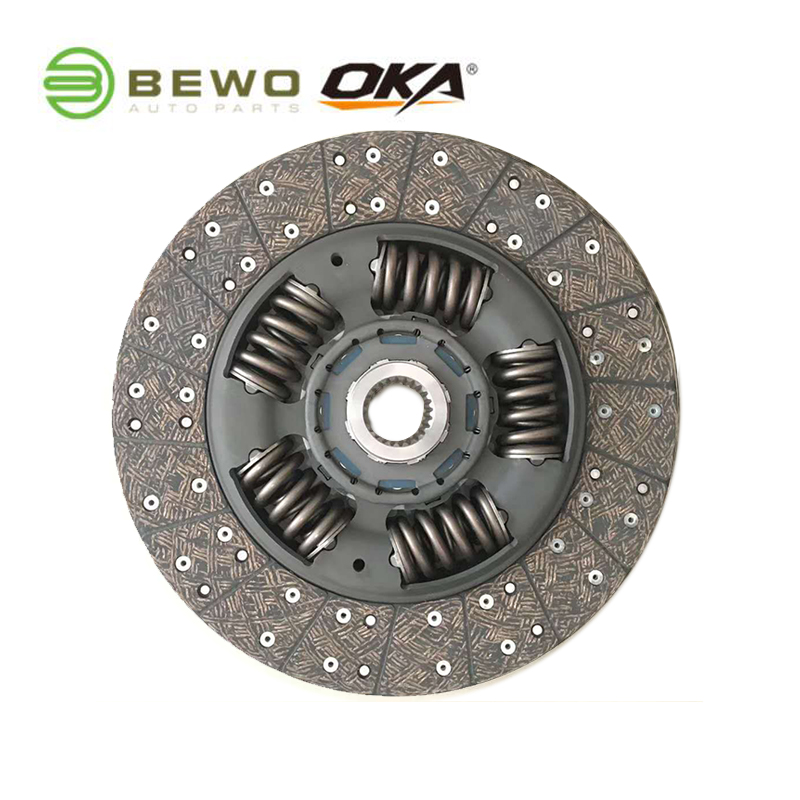
Commercial parts wholesalers and fleet operators face a critical choice. Dealership parts guarantee fitment but carry a steep premium markup. Premium aftermarket solutions provide identical or superior metallurgical properties at a much better B2B price point, allowing wholesalers to offer competitive pricing and fleets to optimize their cost-per-mile.
Material selection drives overall lifecycle value. Frame this decision around the specific fleet application:
Feature | Ceramic Friction Material | Premium Organic Material |
|---|---|---|
Application Focus | Severe-duty, vocational (Mack, Shacman) | Over-the-road / Logistics (Volvo, Scania, Mercedes) |
Heat Tolerance | Extremely high; resists fading | Optimized for sustained highway temperatures |
Engagement Feel | Aggressive, heavy bite | Smooth, predictable, protects AMT actuators |
Strategic sourcing requires partnering with vetted suppliers. By doing so, wholesalers access robust catalogs of heavy-duty components tailored for European fleets. For example, integrating a reliable 1878000294 Aftermarket Truck Clutch Plate provides OEM-level durability for major European applications at a highly competitive procurement cost.
Specifying the correct assembly requires meticulous attention to detail. Professional wholesalers and mechanics cannot guess part numbers. European commercial trucks—such as Mercedes-Benz, Volvo, Scania, MAN, and Renault—feature highly advanced push-type or pull-type diaphragm spring designs. Domestic heavyweights like Shacman also demand exact specification matching. The bolt patterns and spline diameters do not cross over arbitrarily.
You must demonstrate precise sourcing logic. For instance, matching a Sachs Type 1878007170 For European Truck 430wgtz Truck Clutch ensures flawless fitment for specific Euro-spec 430mm systems. Ordering exact-match items prevents installation delays and keeps service bays moving efficiently.
Emphasize purchasing from ISO-certified suppliers who provide transparent warranty terms and verifiable metallurgical testing data. Quality assurance testing ensures the spring steel and friction resins will withstand the real-world demands of heavy European and domestic logistics.
Procuring a massive torque-rated assembly solves only half the problem. The best-engineered component will fail if installed incorrectly by a repair shop. Proper installation on a Scania or Renault requires specialized transmission jacks, alignment tools, and strict adherence to service manuals.
For modern AMTs, technicians must perform a computer calibration post-installation to relearn the clutch engagement point. Standard operating procedure also dictates replacing the pilot bearing and release bearing during any teardown. Replacing a low-cost bearing prevents a multi-thousand-dollar failure down the road.
Repair shops need dependable B2B suppliers. To maintain high fleet readiness, you need a steady, reliable supply of premium heavy duty truck clutches. Streamlined procurement keeps your clients' trucks hauling freight instead of waiting on parts.
A heavy-duty truck clutch acts as a vital commercial asset for logistics fleets. Understanding how massive diaphragm springs and premium friction materials manage the extreme torque of European (Mercedes, Volvo, MAN) and domestic (Shacman) trucks allows wholesalers and repair shops to make smarter, data-driven B2B procurement choices. Correct diagnosis prevents wasted labor, while precise component matching ensures long-term operational reliability.
Take control of your parts supply chain or fleet maintenance costs today. Consult with our technical sales team to evaluate your specific European and domestic drivetrain requirements. Browse our comprehensive B2B catalog to cross-reference OEM part numbers and secure high-yield, premium aftermarket replacements.
A: Yes, but in a different way. Many modern commercial vehicles (like Volvo's I-Shift or Mercedes PowerShift) use Automated Manual Transmissions (AMTs). AMTs still rely on massive mechanical friction clutches to transfer power, but they eliminate the driver's foot pedal. A computer controls pneumatic actuators to engage the system. The core wear components (disc, pressure plate, release bearing) remain identical in principle and require the same high-quality replacement parts.
A: A commercial unit typically lasts between 150,000 and 300,000 miles. Vocational applications, like Shacman dump trucks or Mack logging rigs, reduce this lifespan significantly due to constant stopping under heavy loads. Over-the-road (OTR) highway trucks from Scania or MAN often exceed 300,000 miles. Routine maintenance and AMT calibrations heavily influence longevity.
A: These terms describe how the release mechanism actuates the pressure plate's diaphragm spring. A push-type system requires the release bearing to push inward toward the engine to disengage the drivetrain. A pull-type system requires the linkage to pull the release bearing away from the engine. Brands like Renault, MAN, and Mercedes utilize specific configurations depending on the model year, so matching the exact OEM specification is critical for wholesalers and repair shops.


