

Views: 0 Author: Site Editor Publish Time: 2026-06-10 Origin: Site


A breakdown of your clutch plate is rarely just a simple mechanical failure. It represents an immediate disruption to power transfer. This sudden disruption instantly immobilizes commercial vehicles and creates compounding operational downtime. You must view the driven disc as the critical friction interface. It sits squarely between the engine’s flywheel and the transmission system. When it operates correctly, torque flows smoothly from the engine to the wheels. When it degrades, the entire heavy-duty drivetrain suffers under abnormal stress.
Recognizing early degradation is absolutely essential for fleet managers, repair facility technicians, and the parts wholesalers who supply them. You need to understand exact replacement criteria to prevent severe collateral damage. Catching problems early keeps adjoining components safe from excessive heat. It also helps fleets avoid costly, unplanned vehicle grounding. In this guide, you will learn how to identify distinct warning signs. We will also explore collateral drivetrain risks and outline exact procurement strategies for commercial parts.
A deteriorating clutch plate directly compromises torque transfer, manifesting as acceleration slip, persistent burning odors, and gear engagement resistance.
Ignoring a degraded clutch disc forces the pressure plate and flywheel to absorb excess heat and friction, exponentially increasing eventual repair costs for fleets.
Selecting a replacement requires matching exact specifications to the vehicle's operational load, ensuring full compatibility with mainstream European and domestic heavy-duty trucks.
Proper implementation involves comprehensive diagnostics of surrounding components by repair shops to ensure the new plate achieves its rated lifespan.
Unplanned downtime often begins with ignored diagnostic indicators. Fleet operators frequently overlook minor changes in drivability. Identifying these symptoms early limits the eventual repair scope. Professional mechanics must train drivers to recognize distinct physical feedback. These early warnings indicate the friction material is nearing the end of its functional life.
Torque loss occurs when friction material wears exceptionally thin. The disc simply loses its ability to grip the flywheel tightly. Under heavy load, the disc begins to slip against the metal surface. It can no longer transfer 100 percent of the rotational energy. The mechanism here relies entirely on surface friction. Once the material degrades, the clamping force of the pressure plate cannot compensate.
Drivers will notice specific symptoms during operation. Engine RPMs will spike suddenly without a proportional increase in vehicle speed. This happens most frequently on inclines or when hauling heavy payloads in a fully loaded rig. You press the accelerator, the engine roars, but the truck hesitates. This slip confirms immediate material failure.
Shifting hardships point to a different failure mechanism. Sometimes, a warped disc prevents the clutch from fully disengaging. Broken torsion springs inside the hub can also lodge themselves in the assembly. When the pedal is pressed, the connection to the engine should sever completely. If it does not, the input shaft keeps spinning.
This creates distinct, unavoidable symptoms. You will hear loud grinding noises during routine gear shifts. The pedal might develop a "spongy" or inconsistent feel. Drivers often experience intense physical difficulty slotting the shifter into gear. The transmission synchronizers fight against the still-spinning input shaft.
Thermal overload acts as a severe warning sign. Constant slipping generates extreme localized heat inside the bell housing. This immense heat actively burns the resin holding the friction material together. Friction plates require specific temperature ranges to operate efficiently. Exceeding these temperatures fundamentally destroys the structural integrity of the pad.
The symptom is unmistakable. A distinct, acrid burning smell will be detected during normal operation. It often smells like burning brakes or melting rubber. This scent indicates immediate thermal degradation. Repair shops should advise fleets to stop operating the vehicle immediately upon noticing it.
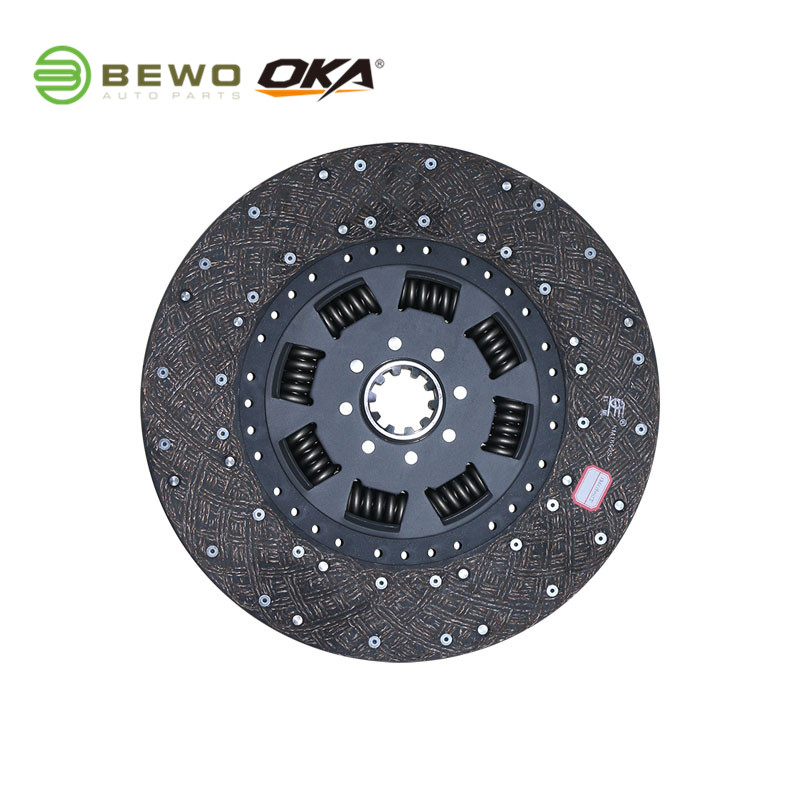
Operating a commercial vehicle with a compromised friction disc is never a static problem. It actively damages adjacent, higher-cost components within the drivetrain. Every extra mile driven multiplies the final repair bill. We classify this as a severe mechanical risk. You must view the failure as a domino sequence.
Friction Material Depletion: The pad wears down to the bare metal rivets.
Thermal Runaway: Slipping generates uncontrolled heat across mating surfaces.
Component Warpage: Intense heat distorts precision-machined metal parts.
Synchronizer Failure: Incomplete disengagement destroys transmission internals.
Exposed rivets on a worn disc will carve deep grooves into the flywheel. These rivets act like cutting tools against the smooth metal. This scoring forces a mandatory resurfacing procedure. If the grooves are too deep, you face a complete flywheel replacement. You cannot mate a flat new disc to a heavily scored surface.
Excessive heat also ruins the pressure plate. Heat from a slipping disc warps the heavy metal casting. This destroys its ability to clamp effectively. Even if a repair shop installs a new disc later, a warped pressure plate will fail to hold it. The diaphragm springs lose their tension under extreme thermal stress.
Finally, the transmission absorbs the residual shock. Forced shifting due to incomplete disengagement accelerates wear on the synchronizers. Drivers often try to force the shifter into gear. This action grinds the internal brass rings. What should be a routine consumable replacement turns into a major gearbox overhaul.
Navigating the procurement of a replacement requires a strategic approach. Wholesalers and fleet procurement managers must move beyond simple brand names. Focus instead on evaluating physical and operational specifications. Commercial environments demand exact engineering matches. We categorize these solutions into distinct dimensional and material requirements.
Replacements must strictly align with your vehicle's exact torque output. Whether outfitting European mainstream heavy-duty trucks like Mercedes-Benz, Volvo, Scania, MAN, Mack, and Renault, or servicing reliable domestic models like Shacman, dimensional matching remains completely non-negotiable. An undersized disc will shatter under commercial loads. You must verify the diameter, the spline count, and the hub profile.
Consider specific high-torque industrial drivetrain configurations. You might need to source a specific 1878000635 400mm Clutch Plate designed for severe applications. A heavy-duty plate like this guarantees the spline engagement matches the heavy transmission input shaft perfectly, preventing the hub from stripping out during aggressive acceleration.
Choosing the right friction material dictates how the heavy truck will handle its payload. The wrong material creates drivability issues or premature wear. Parts suppliers and technicians must balance engagement smoothness against ultimate heat tolerance.
Material Type | Engagement Feel | Heat Tolerance | Ideal Application |
|---|---|---|---|
Organic | Smooth and predictable | Moderate | Standard line-haul routes, light-to-moderate duty commercial trucks. |
Ceramic | Aggressive, abrupt | Extremely High | Heavy hauling, severe-duty applications, construction fleets. |
Kevlar | Smooth but firm | High | Mixed-use fleets requiring longevity and high torque capacity. |
Organic materials provide smooth engagement and a standard lifespan. Ceramic or Kevlar options offer much higher heat tolerance and ultimate torque capacity. However, they often cause harsher engagement and can accelerate flywheel wear over time. Repair centers should recommend them strictly for severe-duty hauling.
You must also evaluate the quality of the torsion springs. These springs act as hub dampeners. They absorb the initial shock when the drivetrain engages. Inferior springs lead to severe driveline vibration. Under heavy loads, cheap springs can snap entirely. A broken spring will lodge in the pressure plate, causing immediate failure.
Procuring parts for commercial wholesale or fleet use involves strict validation. You cannot afford unexpected failures on the road. Knowing how to evaluate manufacturing partners ensures long-term part integrity. Do not fall for exaggerated durability claims from unverified vendors; rely on established industrial leaders.
For wholesale distributors and large-scale repair networks, choosing the right manufacturing source is crucial. Enterprises located in established hubs, such as Yuhuan—the premier "China Auto Parts Industry Base"—offer significant supply chain advantages. Look for manufacturers that operate with advanced equipment, scientific management systems, and ISO 9001:2000 certification. Upholding principles of "Quality, Reputation, and Strict Management" ensures that every clutch component meets global heavy-duty standards.
Always map aftermarket part numbers directly to OEM specifications. This guarantees exact fitment. For example, utilizing a 1862190105 400mm Mercedes Benz Truck Clutch Disc ensures precise spline alignment for specific models. It provides OEM-grade heat dissipation specifically engineered for those commercial chassis. Cross-referencing dimensions eliminates installation surprises for the mechanic.
Best practice dictates evaluating the entire assembly, not just the disc. Repair shops must decide between a standalone replacement or a full kit. Replacing just the friction disc introduces massive risk. Leaving an aged release bearing or a heat-cycled pressure plate invites secondary failure. We strongly advise replacing the entire system simultaneously.
A flawless part will still fail if installation procedures are compromised. The physical installation environment dictates long-term reliability. Mechanics must follow stringent prerequisites to protect the new component. Skipping steps during installation guarantees premature deterioration.
Surface preparation remains the most critical prerequisite. The flywheel must be professionally machined or entirely replaced. Mating a perfectly flat new disc to a warped or glazed flywheel guarantees immediate slipping. The old metal surface contains embedded resins and hard spots. You must provide a clean, cross-hatched metal surface for the new material to bed into.
Highlight the absolute necessity of proper alignment tools. Misalignment during installation causes severe structural damage. If the transmission hangs on the input shaft during reassembly, it will bend the disc hub. It can also permanently damage the transmission input shaft bearings. You must support the gearbox fully until it mates flush with the engine block.
Finally, set realistic expectations regarding the break-in period. New friction materials require a 500-to-1,000-mile break-in period. This phase requires gentle engagement to mate properly with the newly machined flywheel. Heavy hauling immediately post-installation drastically overheats the fresh material. This action instantly voids manufacturer performance baselines.
A broken clutch halts all forward operations and compromises fleet safety instantly.
Ignoring early warning signs accelerates wear across the flywheel, pressure plate, and transmission.
Matching exact torque ratings, dimensions, and friction materials for specific European and domestic trucks is critical for commercial success.
Professional installation requires comprehensive surface preparation and strict alignment protocols.
Wholesalers, fleet managers, and technicians must transition from mere diagnosis to strategic procurement. We urge you to closely cross-reference your vehicle's exact torque ratings. Always verify dimensional requirements before finalizing any purchase. Ensuring the chosen component aligns perfectly with your specific operational payload secures your drivetrain. Take immediate action when slipping occurs to protect your operational bottom line.
A: It is highly discouraged. While a mildly slipping clutch might allow a vehicle to limp to a shop, a fully broken plate will result in total loss of motive power and guarantee catastrophic damage to the flywheel and transmission synchronizers.
A: Lifespan is entirely dependent on duty cycle, driver habits, and load weight. While standard estimates range from 50,000 to 100,000 miles, continuous stop-and-go heavy hauling can reduce this significantly.
A: The pressure plate's diaphragm springs undergo the same thermal cycles and mechanical fatigue as the disc. Reusing an old pressure plate typically results in inadequate clamping force, causing the new disc to slip and fail prematurely.


