

Views: 0 Author: Site Editor Publish Time: 2026-08-17 Origin: Site


A slipping gear or a spongy pedal in a heavy-duty commercial truck forces a direct maintenance question. Is the transmission failing, or has the friction material simply reached its limit? For truck clutch parts wholesalers, fleet managers, and heavy-duty repair shops, this is a critical issue. The connection between a massive diesel engine and the transmission relies entirely on friction. Unpredictable lifespans make it difficult for fleets to schedule necessary downtime, impacting their bottom line. Premature failure disrupts logistics operations, leads to costly tow bills, and risks collateral damage to the transmission input shaft and flywheel on premium vehicles like Mercedes-Benz, Volvo, Scania, MAN, Mack, Renault, and robust domestic workhorses like Shacman.
Moving beyond generic mileage averages requires a technical evaluation of wear factors and diagnostic indicators specific to commercial trucking. Wholesalers and repair shops cannot effectively supply or service fleets without understanding the mechanical realities of heavy-duty friction wear. We must look at how driver habits, gross vehicle weight (GVW) demands, and operational environments destroy mating surfaces. Evaluating these elements allows procurement managers to maximize component longevity, select the right replacement parts, and avoid catastrophic driveline failures on the road.
Baseline Expectation: The industry standard lifespan for a factory heavy-duty truck clutch falls between 250,000 and 500,000 miles (for over-the-road applications), assuming proper technique and automated manual transmission (AMT) calibration.
Application Dictates Wear: Heavy hauling, mining operations (typical for Shacman dump trucks), and frequent stop-and-go urban deliveries exponentially accelerate friction material degradation compared to long-haul highway routes.
Comprehensive Replacement: For repair shops, installing a complete clutch kit rather than replacing individual components prevents mismatched wear rates, eliminates redundant labor costs, and reduces warranty claims for parts distributors.
Material Trade-offs: Stocking the right friction materials (e.g., organic vs. ceramic) allows wholesalers to meet specific fleet needs, balancing extreme torque capacity for heavy haulers against smooth engagement for regional delivery trucks.
Defining a normal lifespan establishes a baseline for evaluating premature failure. Repair facilities and fleet operators rely on statistical averages to schedule preventative maintenance, keeping Cost-Per-Mile (CPM) low. Understanding these averages helps parts distributors anticipate wholesale demand before a mechanical breakdown leaves a rig stranded.
The statistical average for modern European and Chinese commercial manual or AMT transmissions sits between 250,000 and 500,000 miles for highway applications. This standard assumes mixed driving conditions and competent shifting. Predominantly highway mileage in a Volvo FH or Scania R-series drastically reduces the frequency of engagement and disengagement. Vehicles operating under these optimal conditions experience minimal wear on the 430mm friction disc and heavy-duty pressure plate.
Real-world mileage variations paint a broader picture for service centers. Vocational trucks, such as Shacman mixers or MAN construction vehicles, might experience premature failures at 60,000 miles due to extreme off-road conditions and constant PTO (Power Take-Off) engagement. Conversely, a skilled driver navigating flat highways can preserve the mating surfaces indefinitely. A driver who constantly slips the pedal in heavy port traffic destroys the friction material rapidly.
Evaluating the baseline longevity of factory-installed components versus standard aftermarket replacements reveals distinct quality gaps. Wholesalers must stock reliable brands. Cheaper, unbranded aftermarket kits suffer from inferior friction compounds that glaze under extreme commercial payloads. Investing in a high-quality, commercial-grade clutch kit ensures your fleet clients meet or exceed factory lifespan expectations, building trust in your parts supply.
Driver habits and operational loads dictate the mechanical wear rate more than any other factor. For fleets still operating manual gearboxes, riding the clutch pedal generates continuous friction. Aggressive launches with 80,000+ lbs of cargo generate excess heat, melting the resins in the friction material and glazing the disc. A glazed disc loses its abrasive qualities and begins to slip uncontrollably, a common issue in heavily loaded Mack or Renault trucks navigating steep grades.
The compounding effect of early damage accelerates total failure. Minor, unnoticed slipping early in the component's life exponentially accelerates friction material loss. When a massive 400mm or 430mm disc slips, it generates immense heat. This heat warps the cast-iron pressure plate and creates hot spots on the flywheel. What starts as a minor technique flaw quickly snowballs into severe heat damage, requiring an expensive visit to the repair shop.
Vehicle application and payload place immense strain on the pressure plate clamping force. Heavy haulage demands significantly more kinetic energy transfer to move the vehicle from a dead stop. Commercial fleets require specialized, rigorously tested components. Standard duty components disintegrate under the torque demands of a fully loaded Shacman mining truck. These severe-duty applications require upgraded ceramic friction materials and stronger diaphragm springs.
Common Wear Factors in Commercial Trucking
Wear Factor | Mechanical Consequence | Impact on Fleet Lifespan |
|---|---|---|
Heavy Haulage / Overloading | Excessive slipping required from a dead stop | Severe reduction without severe-duty upgraded parts |
Vocational / Construction Routing | High frequency of mechanical cycling and debris | Moderate to severe reduction due to bearing wear |
Poor AMT Calibration | Slipping or harsh mechanical shock to the sprung hub | Gradual reduction, high risk of hub failure |
Riding the Pedal (Manuals) | Continuous partial engagement, overheating | Severe reduction, immediate glazing |
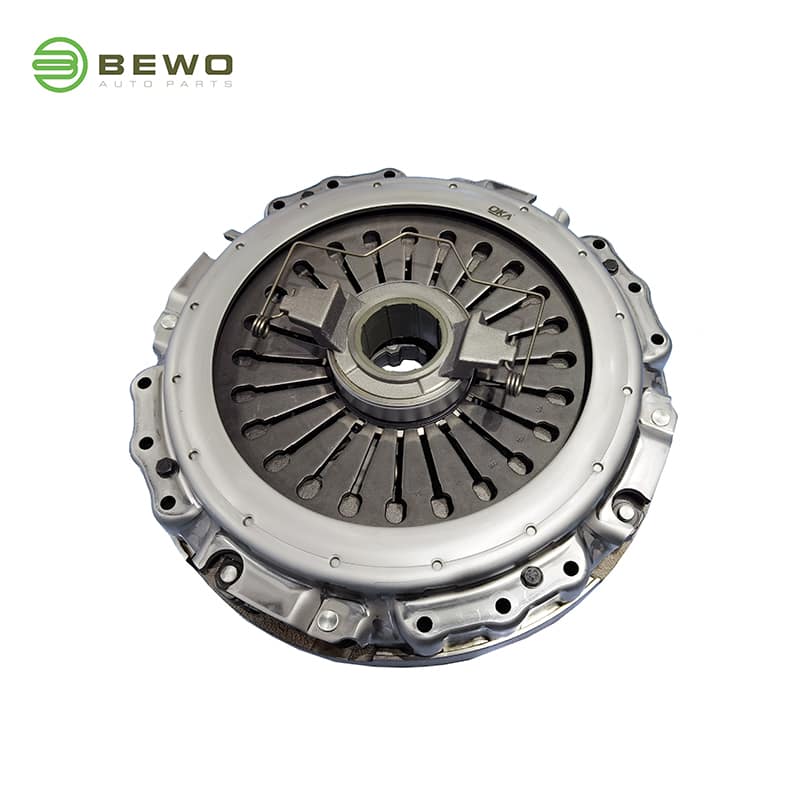
For manual commercial vehicles, shifting into neutral at idle dramatically reduces mechanical strain. Holding the pedal forces the release bearing against the spinning diaphragm spring under immense pressure. Shifting into neutral disengages the bearing entirely, adding tens of thousands of miles to its life. For modern fleets utilizing AMTs (like Volvo I-Shift or Mercedes PowerShift), ensuring software updates and pneumatic servo maintenance are performed regularly is the equivalent of "good driver habit."
Incline management requires specific techniques, especially at maximum GCW (Gross Combination Weight). Drivers should rely on the truck's hill-start assist features rather than using the bite point to hold the vehicle stationary against gravity. Using the driveline as a brake generates extreme heat and rapidly degrades the commercial disc.
Furthermore, utilizing engine brakes (Jake brakes) or transmission retarders instead of downshifting to slow the vehicle preserves the friction material. Brake pads and retarder maintenance are far cheaper than dropping a heavy-duty transmission to replace a burnt clutch.
Train fleet drivers to utilize engine brakes/retarders to slow the vehicle rather than aggressive downshifting.
Ensure AMT systems are regularly calibrated via diagnostic tools to maintain optimal engagement parameters.
Shift manual transmissions into neutral at long stops rather than holding the heavy pedal to the floor.
Maintain the pneumatic clutch servo system; air leaks lead to partial engagement and rapid wear.
Identifying the tipping point between acceptable wear and imminent mechanical failure saves fleets from costly roadside breakdowns. Waiting until a fully loaded Scania refuses to move guarantees collateral damage to the flywheel. Early diagnosis by fleet mechanics allows for scheduled maintenance. Recognizing the symptoms of degradation ensures repair shops replace the necessary components before they destroy surrounding parts.
Mechanical symptoms provide the most obvious indicators. RPM surging without corresponding vehicle acceleration confirms the disc is slipping under load. Shuddering or chattering during first-gear engagement points to severe surface damage, indicating hot spots or a warped dual-mass flywheel (DMF). In pneumatic assist systems, a sluggish pedal or failure to go into gear often points to a failing clutch servo rather than the disc itself, requiring careful diagnosis by the repair technician.
Auditory and olfactory indicators often precede total mechanical failure. Squealing or chirping noises that disappear when the pedal is depressed indicate throw-out bearing failure. Acrid, burning smells resembling burning brake pads result from overheating friction material, usually occurring after aggressive hill starts with a heavy trailer.
Monitor diagnostic trouble codes (DTCs) on AMT-equipped trucks for clutch position sensor faults or excessive wear indicators.
Perform a road test under load; if engine RPMs shoot up rapidly on an incline but vehicle speed lags, the friction disc is slipping.
Listen for a high-pitched squeal from the bellhousing during engagement, pointing to a failing heavy-duty release bearing.
Check the air pressure to the clutch servo; insufficient pressure causes incomplete disengagement and gear grinding.
For wholesalers and fleet managers, categorizing replacement strategies based on vehicle requirements ensures optimal performance. You must match the replacement components to specific operational conditions. Supplying a standard replacement for a Shacman quarry truck guarantees premature failure and a dissatisfied customer. You must evaluate the engine's torque output and the chassis' payload demands.
The case for a complete clutch kit rests on long-term reliability for fleets. Piecemeal replacement is a false economy in commercial trucking. Changing only the friction disc leaves a worn pressure plate and a degraded release bearing. The labor-cost rationale heavily favors replacing all mating components simultaneously, as dropping a heavy commercial transmission requires specialized jacks and significant labor hours.
For parts distributors, understanding the 3 piece clutch kit clarifies the wholesale offering. This package includes the three essential components: the heavy-duty pressure plate (cover), the friction disc, and the release bearing. Providing this complete solution ensures repair shops have everything they need for a flawless installation on brands like DAF, MAN, or Scania.
Upgrading to a severe-duty truck clutch repair kit becomes necessary for extreme applications. Logging trucks, heavy haulers, and construction vehicles exceed standard design limits. Look for increased clamping force, robust sprung hub designs for superior vibration dampening, and premium friction materials capable of handling the massive torque of 13L to 16L European diesel engines.
Breaking down the financial reality of fleet maintenance requires looking at total downtime. The intensive labor and lost revenue of a parked truck often exceed the cost of premium replacement parts. Because the labor investment is so high, installing cheap, unverified parts makes no financial sense for a repair shop or a fleet. Wholesalers must provide high-quality parts that balance upfront costs with maximum longevity.
Friction material selection directly impacts longevity. Organic materials offer smooth engagement for regional delivery (e.g., lightweight Renault or MAN rigids). Ceramic and metallic materials offer maximum heat and torque capacity, essential for heavy Shacman dumpers or Volvo heavy-haul tractors, though they cause accelerated flywheel wear over time.
Commercial Friction Material Application Guide
Material Type | Engagement Feel | Heat Tolerance | Ideal Commercial Application |
|---|---|---|---|
Organic / Premium Composite | Smooth, progressive engagement | Moderate | City delivery, regional LTL freight, standard highway |
Kevlar Blend | Slightly stiffer, excellent wear | High | Long-haul fleets requiring extended maintenance intervals |
Ceramic/Metallic (Sintered) | Aggressive, handles extreme slip heat | Extreme | Heavy haulage, Shacman mining/construction, heavy towing |
Establishing a properly installed baseline ensures wholesale parts don't return as warranty claims. Improper torque specs on the heavy-duty pressure plate warp the housing. Failing to clean the anti-rust coating off the new pressure plate surface contaminates the friction disc. These errors halve the expected lifespan before the truck even leaves the bay.
Flywheel resurfacing or replacement is a critical necessity. Mechanics must mate a new 430mm friction disc to a perfectly flat, unglazed flywheel surface. Skipping this step guarantees shuddering upon engagement and forces the shop to drop the transmission a second time for free. For modern trucks with Dual Mass Flywheels (DMF), checking for rotational play is mandatory.
Pilot bearing replacement and proper alignment using heavy-duty tools ensure the massive transmission input shaft slides into the splines without bending the new hub. Additionally, for modern European fleets (Volvo, Mercedes, Scania), re-calibrating the AMT system via an OBD diagnostic computer is absolutely required. The truck's ECU must learn the new clutch engagement point; failing to calibrate will result in harsh shifting and rapid destruction of the new parts.
Inspect the rear main engine seal and transmission input shaft seal for oil leaks while the bellhousing is open.
Clean the new pressure plate and flywheel surfaces thoroughly with brake parts cleaner.
Apply a very light coat of specialized high-temperature spline grease to the transmission input shaft—excess grease will spin off and ruin the disc.
For AMT vehicles, utilize fleet diagnostic software to perform clutch adaptation/calibration before the test drive.
Inspect and test the pneumatic clutch servo and air lines for optimal actuation pressure.
Fleet managers should mandate regular diagnostic scans to monitor clutch wear parameters on AMT-equipped trucks.
Train drivers on proper automated and manual shifting techniques to minimize driveline shock.
Wholesalers must stock complete, brand-specific 3-piece kits (Volvo, Benz, Scania, Shacman) to provide repair shops with reliable, all-in-one solutions.
Repair shops must strictly adhere to flywheel resurfacing protocols and AMT software calibrations to prevent costly comebacks.
A: Yes. Highway driving requires fewer gear changes. Vehicles like the Mercedes Actros or Scania R-series driven primarily on highways often see component lifespans exceeding 400,000 miles due to minimal mechanical cycling, whereas a city delivery truck may need replacement much sooner.
A: Replacing only the disc leaves worn pressure plates and bearings in place, leading to premature failure. The intensive labor cost to drop a heavy-duty commercial transmission makes piecemeal replacement a terrible financial decision. Always purchase and install complete kits.
A: Glazing occurs when excessive heat melts the friction material resins. This usually happens from overloaded hill starts, backing heavy trailers up inclines, or poor AMT calibration causing the system to slip. Once glazed, the material loses grip and must be replaced.
A: A vibrating pedal in a manual, or harsh juddering in an AMT, often points to a warped flywheel, hot spots on the pressure plate, or a broken sprung hub on the disc. It requires immediate diagnostic attention to prevent catastrophic transmission damage.
A: Absolutely. Moving 80,000+ lbs from a dead stop generates intense heat. Heavy-duty upgrades, such as severe-duty ceramic friction materials, are required for these applications to mitigate accelerated wear, especially in vocational trucks like Shacman or heavy-haul Volvos.
A: Yes. After repair, the truck should undergo several hundred miles of moderate driving to allow the new friction material to seat evenly against the flywheel and pressure plate. Avoid max-weight heavy hauling or steep incline starts during this critical bedding process.


