

Views: 0 Author: Site Editor Publish Time: 2026-06-24 Origin: Site


The terms "clutch plate" and "friction plate" get thrown around interchangeably in heavy-duty procurement. This terminology overlap causes purchasing errors, diagnostic confusion, and miscommunication between shop technicians and parts suppliers. Ordering the wrong transmission components leads to extended vehicle downtime, increased labor hours, and potential damage to the flywheel or pressure plate. The cost of ambiguity hits hard in commercial fleet operations where every hour off the road matters. While the terms relate to the same system, distinguishing between the structural assembly and the consumable friction surface ensures you secure the correct components for your specific drivetrain. Understanding this structural distinction is mandatory for accurate diagnostics, part selection, and effective fleet maintenance.
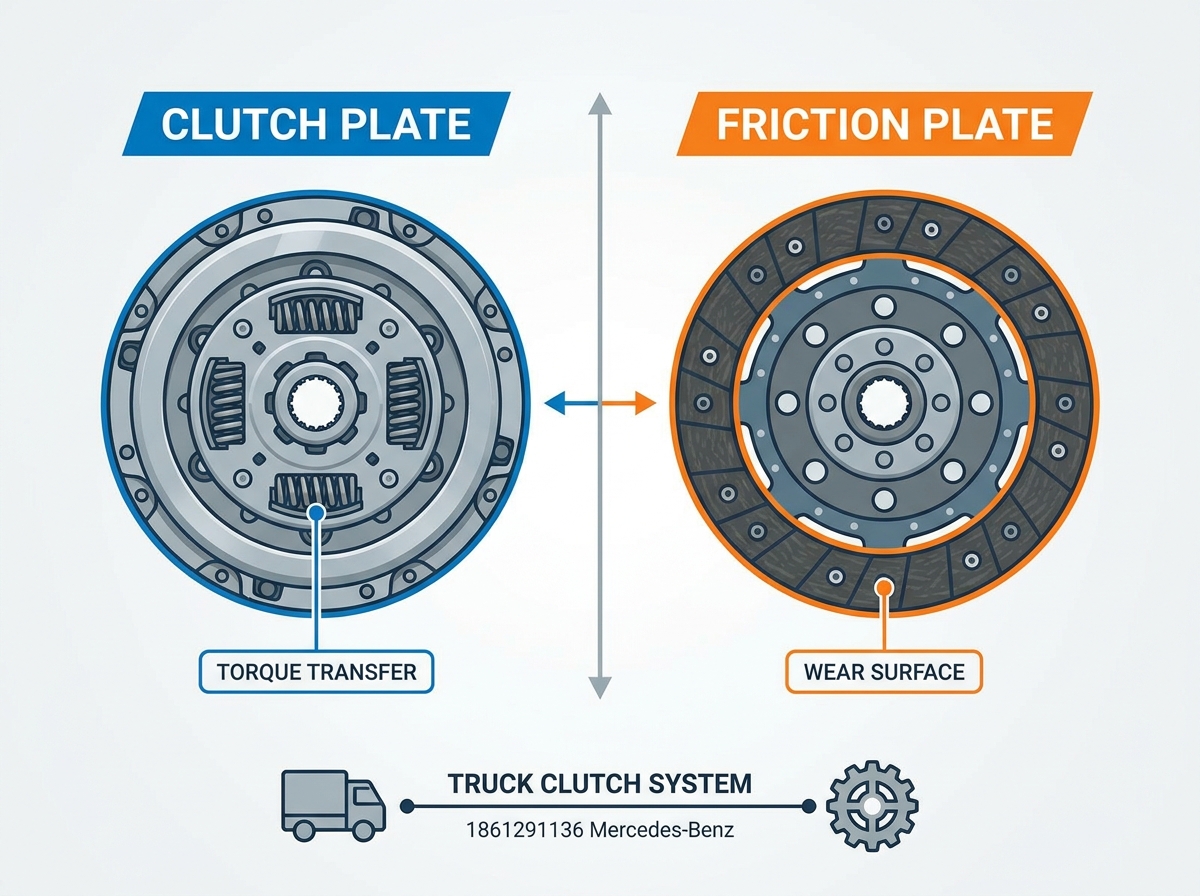
Terminology Distinction: A clutch plate (or driven plate) is the complete structural assembly, whereas the friction plate (or friction disc/material) refers specifically to the wearable surface attached to the clutch plate.
Systemic Variations (Wet vs. Dry): The usage of these terms changes drastically between dry-clutch truck applications (where the friction material is permanently attached to the clutch plate) and wet-clutch applications (where distinct, alternating steel plates and friction plates operate in an oil bath).
Material Impact: The composition of the friction material (organic, ceramic, Kevlar) directly dictates torque capacity, heat dissipation, and engagement characteristics.
Heavy-Duty Requirements: Commercial applications, such as a heavy-duty truck clutch, require specialized torsional dampeners and high-heat friction materials to manage extreme load stresses.
Precision Procurement: Relying on exact OEM part numbers (e.g., 1861291136 Mercedes-bens clutch plate) is mandatory to ensure spline count, diameter, and dampener spring rates match the specific drivetrain.
The clutch plate serves as the central structural component connecting the engine's flywheel to the transmission input shaft. It is a complex assembly designed to transmit torque while absorbing driveline vibrations. The core sub-components include the central splined hub, which engages the transmission input shaft, the steel carrier disc (often featuring a marcel spring for smooth engagement), and the torsional vibration dampers. These springs cushion the shock of engagement and isolate engine pulses from the transmission gear set. When we inspect a driven plate in the shop, we look at the integrity of the hub splines and the tension of the dampener springs just as much as the friction surface.
The friction plate refers to the specific, wearable lining riveted or bonded to the outer edge of the clutch plate assembly. Its primary function is to generate the necessary friction against the flywheel and pressure plate to transfer torque without slipping. This material dictates the engagement feel, heat resistance, and overall torque capacity of the system. Mechanics often measure the depth from the friction surface to the rivet heads to determine remaining service life. Once the material wears down to the rivets, metal-to-metal contact occurs, destroying the flywheel and pressure plate surfaces.
In dry clutch systems, typical of a standard manual truck clutch, a single clutch plate assembly features friction linings bonded to both sides of the carrier disc. The entire unit operates in the dry environment of the bell housing. Conversely, wet clutch systems utilize multi-plate setups. You find these in automatic, powershift, and motorcycle transmissions. Here, "friction plates" (splined on the inside to lock to the shaft) and "steel clutch plates" (splined on the outside to lock to the drum) exist as completely separate, alternating loose physical discs operating in an oil bath. The fluid cools the components and flushes away wear debris.
Mechanics and suppliers often use the terms interchangeably in dry clutch systems because the components are permanently joined. When a clutch plate fails, it is almost always the friction plate material that has worn down or glazed. However, understanding the distinction is vital for accurate diagnostics. Structural failures require different considerations than simple friction material wear. For example, a truck dropping dampener springs into the bell housing has a structural clutch plate failure, even if the friction material looks brand new.
Organic friction materials offer smooth engagement and operate well at lower temperatures. They consist of metallic fibers woven into organic resins. They are the standard choice for OEM replacements in light-duty applications. However, they are prone to fading under extreme heat or heavy towing loads. When an organic disc overheats, the resins break down, causing the clutch to slip uncontrollably. We rarely specify organic materials for severe commercial use due to this thermal limitation.
Cerametallic compounds provide high heat tolerance, aggressive engagement, and superior torque holding capacity. They are ideal for heavy-duty commercial vehicles and high-performance applications. The friction buttons contain a mix of copper, iron, and ceramic powders sintered together. The drawbacks include increased wear on the flywheel and pressure plate, along with the potential for "chatter" or harshness during engagement. Drivers must adapt their shifting habits when moving from an organic to a ceramic setup.
Kevlar and aramid fiber materials offer high durability, resistance to glazing, and smooth engagement characteristics. They bridge the gap between organic and ceramic options. The primary implementation risk is the requirement for a strict and lengthy break-in period. If a driver applies full load before the Kevlar has properly mated with the flywheel surface, the material will glaze over, permanently ruining its friction properties.
The static and dynamic coefficient of friction varies significantly across material types. Ceramic materials maintain a higher coefficient of friction at elevated temperatures compared to organic materials. Understanding the temperature limits before thermal degradation occurs for each class dictates material selection.
Material Type | Engagement Feel | Heat Tolerance | Ideal Application |
|---|---|---|---|
Organic | Smooth | Low to Medium | Standard OEM Replacement |
Cerametallic | Aggressive | High | Heavy-Duty Commercial |
Kevlar | Smooth | Medium to High | High Durability Requirements |
A truck clutch differs fundamentally from standard automotive clutches in terms of clamping force and surface area. To handle massive torque outputs without increasing the bell housing diameter, Class 8 trucks often utilize multi-plate systems. Twin-disc clutches increase the friction surface area, allowing for greater torque capacity and heat dissipation under heavy load stresses. The intermediate plate between the two driven discs acts as an additional heat sink.
Heavy-duty pre-damper and main damper mechanisms protect the transmission from severe diesel engine torsional vibrations. Spring-centered hubs absorb these shocks. Solid hubs (rigid discs) are used in specific transmission profiles where dampening is handled elsewhere in the driveline, such as dual-mass flywheels. Selecting the correct dampener configuration prevents premature transmission input shaft wear and gear rattle.
The relationship between the clutch plate thickness and flywheel step height determines the overall clamping force. It is necessary to check and maintain OEM flywheel step specifications when installing new friction components. Incorrect step height reduces clamping force, leading to slipping and rapid wear. Machinists must cut the mounting surface and the friction surface exactly to spec.
Fleet managers must evaluate replacement options based on expected lifecycle, ease of installation, and warranty coverage. Prioritizing high-quality components reduces the frequency of replacements and minimizes overall vehicle downtime. A cheaper disc that fails at 50,000 miles costs far more in labor and lost revenue than a premium disc that lasts 250,000 miles.
The OEM part number 1861291136 Mercedes-bens clutch plate typically specifies a 395 mm outer diameter, an 18-tooth spline profile, and a 1 3/4" input shaft size. This specific component is engineered for commercial vehicle applications and engine pairings such as the Mercedes-Benz Actros, Axor, or Atego trucks utilizing OM457 or OM906 engines. Verifying these exact specifications ensures proper fitment and function on the shop floor.
Genuine Mercedes-Benz friction materials offer proven reliability and consistent performance compared to many aftermarket alternatives. Using exact OEM specs ensures compliance with fleet warranty requirements and prevents premature drivetrain wear. While aftermarket options may present a lower initial cost, the long-term reliability of OEM components often justifies the investment. We see fewer comebacks when sticking to factory specifications.
Verifying part authenticity involves checking several physical attributes before installation.
Inspect the rivet patterns for uniform spacing and depth.
Measure the carrier plate thickness with calipers to ensure it meets factory specs.
Check for clear manufacturer stamping and part numbers on the hub.
Test the integrated torsional dampener springs for looseness or rattle.
Counterfeit or substandard parts often exhibit poor machining, inconsistent friction material bonding, and incorrect spring rates, leading to rapid failure.
Physical symptoms of failure include slipping under load, shuddering or chattering during engagement, and difficulty shifting gears. Physical measurement thresholds dictate replacement. You must check the minimum rivet head recess depth (typically 0.3mm to 0.5mm). Measure the maximum allowable face runout (typically 0.5mm) using a dial indicator. Check the input shaft spline backlash. It is vital to differentiate between friction material wear and structural failure like broken dampener springs or loose rivets.
Evaluate the labor hours required to access the transmission versus the cost of the parts. It is highly recommended to replace the entire clutch kit rather than attempting to re-line or replace just the friction plate. A complete kit includes the clutch plate, pressure plate, release bearing, and pilot bearing. The labor involved in dropping a heavy-duty transmission far outweighs the cost savings of reusing old components. Do the job once and replace all wear items.
Select the right clutch plate based on vehicle weight, engine torque, and primary use case. Long-haul applications benefit from durable organic or Kevlar materials due to infrequent shifting. Stop-and-go vocational trucks, like dump trucks or refuse haulers, require the high heat tolerance and aggressive engagement of cerametallic options to survive the constant slipping and heavy loads.
Improper spline alignment during installation forces the input shaft, which bends the carrier disc and causes immediate failure. Failing to resurface or replace the flywheel compromises the mating surface, leading to slipping and chatter. Incorrect torque specifications on the pressure plate bolts cause uneven clamping force and vibration. Always use an alignment tool and torque the bolts in a star pattern.
Worn splines on the input shaft cause "clutch drag" and slow release. The disc hangs up on the worn grooves instead of sliding freely. Apply a thin layer of specialized nickel-based or lithium-based high-temperature grease to the splines. Crucially, remove excess grease to prevent centrifugal contamination of the friction material. Grease on the friction surface causes immediate slipping and glazing.
The physical process of mating the new friction plate to the flywheel requires a break-in period. Thermal shock or aggressive driving during the first 500 miles leads to glazing, hot spots, and localized material transfer. Smooth, deliberate engagement during this period ensures optimal performance and longevity. Instruct drivers to avoid heavy towing or slipping the clutch excessively during this window.
Rear main seal oil leaks or hydraulic fluid from the slave cylinder can ruin the friction material. Contamination drastically reduces the coefficient of friction, necessitating premature replacement of the entire assembly. Always inspect and replace leaking seals during installation. A $20 seal can destroy a $1,000 clutch job if ignored.
Consult your vehicle's factory service manual to confirm exact torque specs and step height requirements before beginning the teardown.
Verify exact part numbers and spline counts with your supplier to prevent mid-job delays.
Inspect and replace all associated hardware, including the pilot bearing, release bearing, and rear main seal, while the transmission is removed.
Enforce a strict 500-mile break-in period for fleet drivers to ensure proper mating of the new friction material.
A: A clutch plate is the complete structural assembly connecting the flywheel to the transmission. A friction disc refers specifically to the wearable friction material bonded or riveted to the outer edge of the clutch plate.
A: In wet clutches, steel plates lock to the outer drum, while friction plates lock to the inner shaft. They alternate and are compressed together to transfer torque, operating in an oil bath for cooling.
A: While re-lining is technically possible, it is rarely recommended. The labor cost to remove the transmission justifies replacing the entire assembly to ensure structural integrity and proper dampener spring function.
A: A heavy-duty truck clutch typically lasts between 150,000 and 300,000 miles, depending on the application, driver behavior, and friction material type. Vocational trucks see shorter lifespans than long-haul vehicles.
A: Glazing is caused by excessive heat from slipping or aggressive driving, which crystallizes the friction material. A severely glazed plate cannot be salvaged and must be replaced to restore proper engagement.
A: Verify fitment by checking your vehicle's VIN against the OEM parts catalog. Confirm the outer diameter (395mm), spline count (18-tooth), and input shaft size match your specific transmission and engine pairing.
A: Yes, ceramic plates offer superior heat tolerance and higher torque capacity, making them ideal for heavy towing. However, they provide a more aggressive engagement and increase wear on the flywheel.


