

Views: 0 Author: Site Editor Publish Time: 2026-06-03 Origin: Site


A sudden transmission failure rarely acts as a simple mechanical hiccup. It represents a critical threat to fleet uptime and overall profitability. When fleets rely heavily on reactive repairs, they invite severe operational risks. Ignored mechanical wear quickly leads to compounded transmission damage. You also face unpredictable service disruptions during critical delivery routes. For commercial fleets, professional repair shops, and the parts wholesalers supplying them, implementing standardized maintenance protocols for heavy duty truck clutches changes this dynamic entirely. Pairing strict inspection routines alongside meticulously evaluated replacement components slashes overhead expenses. Proactive care significantly extends overall powertrain lifespans. This approach ensures your trucks stay on the highway generating steady revenue. Vehicles sitting idle in a repair bay drain resources rapidly. Read on to discover how you can successfully transform your shop strategy from reactive to highly proactive today.
Regular linkage adjustments and proper lubrication intervals are the most cost-effective defenses against premature clutch failure.
Driver behavior training directly impacts clutch longevity; mechanical maintenance must be paired with operational standards.
When replacement is inevitable, matching specific torque requirements and OEM-grade specs (e.g., specific 400mm discs) prevents recurring failures.
Transitioning from run-to-fail to condition-based monitoring requires integrating clutch diagnostics into routine fleet management software (CMMS).
Preventive maintenance requires a very modest upfront financial investment. Compare this tiny expense against the severe financial penalties of unplanned downtime. An on-road failure triggers exceptionally costly heavy-duty towing fees. Towing a fully loaded rig often costs thousands of dollars alone. You also pay premium emergency prices for expedited replacement parts. Lost revenue from missed delivery windows hurts the bottom line even more severely. Your business reputation suffers greatly when freight arrives late due to preventable breakdowns.
What does truly successful maintenance look like in practice? We measure it through extended mileage intervals between required shop visits. A highly successful fleet experiences zero on-road driveline failures annually. You want predictable shop scheduling instead of emergency roadside rescues. Smooth operations keep profit margins stable. They also keep your drivers safe and satisfied.
Industry baseline data reveals a very stark operational contrast. Actively maintained powertrains routinely outlast unmaintained units by a massive margin. Standard monitoring and greasing can push a friction disc well past 500,000 miles. Neglected components often fail prematurely at half that specific distance. Regular preventative service transforms a vulnerable wear item into a highly reliable asset. Fleet managers must understand these baseline numbers to justify dedicating better shop hours to preventative care.
Mechanical wear constantly changes how the engaging system operates. As the friction material thins out, freeplay at the floor pedal diminishes. You must catch this issue before it becomes a massive problem. If pedal freeplay disappears entirely, the throw-out bearing engages continuously against the springs. This constant pressure burns out the release bearing quickly. It eventually ruins the entire rotating assembly.
Mechanics should check pedal free-play during every standard interval. Resetting the mechanical linkage restores proper operating clearance. Most commercial manufacturers recommend checking this gap every 10,000 miles. A simple mechanical adjustment takes only minutes but saves thousands later in replacement labor.
Consider these quick steps for a standard linkage check:
Measure the exact distance of free travel at the top of the pedal.
Compare this physical measurement against specific manufacturer guidelines.
Adjust the linkage rod until you achieve the correct clearance margin.
Verify the internal release bearing has adequate space from the brake.
Proper lubrication keeps the release mechanism operating smoothly daily. You must identify and service all critical greasing points carefully. These vital points include the release bearing, cross shafts, and mechanical linkage joints. Missing just one fitting can cause severe binding.
Be highly aware of specific implementation risks here. Over-lubrication is just as dangerous as chronic under-lubrication. Pumping too much heavy grease forces excess lubricant outward. This stray grease easily contaminates the sensitive friction material. Contamination ruins the assembly instantly and causes heavy slipping. Always follow precise volume guidelines. Use only two or three pumps from a manual hand grease gun. Never use high-pressure pneumatic greasers on a sensitive release bearing.
Many modern commercial trucks utilize hydraulically actuated release systems. These complex systems require strictly dedicated fluid management protocols. Old or heavily contaminated hydraulic fluid destroys internal rubber seals over time. Degraded fluid also boils under high heat, causing pedal fade.
Mechanics must detail specific fluid flush intervals clearly. Inspect both the master and slave cylinders for any signs of weeping. A spongy pedal feel often indicates trapped air or moisture inside the lines. Technicians must bleed the system thoroughly to restore firm engagement. Line integrity checks ensure rubber hoses do not chafe against the steel frame. Replace any bulging or brittle hydraulic lines immediately to prevent sudden leaks.
Commercial drivers serve as the absolute first line of defense. Technicians must translate driver feedback into specific diagnostic actions. Symptoms like severe chattering, slipping under heavy load, or a stiff pedal demand immediate attention. Gear-grinding directly points to a clutch brake or release failure. Ignoring these early warning signs guarantees a roadside breakdown.
Context matters immensely in the real world of truck repair. Mechanics must avoid common diagnostic missteps entirely. Do not confuse broken engine mount vibrations with actual engagement chatter. A worn universal joint can easily mimic a shuddering driveline. Always isolate the specific noise or vibration during engagement. Focused road testing helps confirm whether the issue lies inside the bell housing. Strong odors, such as burning organic material, confirm severe disc slipping.
When you open the bottom inspection cover, strict benchmarks apply. Evaluate the steel flywheel for deep scoring or severe heat checking. Look closely at the remaining friction material thickness. Uneven wear patterns suggest a misaligned bell housing or warped internal components. Blue heat marks indicate severe abuse or constant slipping.
Establish clear tolerance limits for your entire shop. Mechanics need defined rules for when a component transitions from "monitor" to "replace." If a facing wears down dangerously close to the internal rivets, replacement is mandatory. Minor surface glazing might only require monitoring and a quick linkage adjustment. Use a dial indicator to check flywheel runout if you suspect warping.
Symptom Reported by Driver | Probable Mechanical Cause | Recommended Diagnostic Action |
|---|---|---|
Severe slipping under heavy load | Worn friction material or lack of free-play | Adjust linkage immediately; inspect plate thickness |
Violent chatter during engagement | Oil/grease contamination or warped flywheel | Inspect engine seals for leaks; check flywheel runout |
Excessively hard pedal effort | Binding linkage or heavily worn cross shafts | Lubricate pivot points manually; check hydraulic pressures |
Gears grinding on every upshift | Clutch brake failure or poor internal release | Verify free-pedal setting; inspect the brake visually |
Eventually, preventative maintenance reaches its absolute physical limits. Selecting the right replacement parts becomes critical for ongoing fleet reliability. Procurement managers, parts wholesalers, and repair facility directors must choose between standard OEM parts and high-tier aftermarket solutions. Focus strictly on material durability and tight manufacturing tolerances. Cutting corners on cheap parts leads to repeated labor costs.
Application matching prevents premature driveline failures effectively. You must carefully match the torque capacity to the specific engine output. Whether servicing a global fleet or stocking wholesale inventory for regional repair shops, ensuring component compatibility with top-tier vehicles is essential. Replacement clutches must seamlessly fit mainstream European heavy-duty trucks like Mercedes-Benz, Volvo, Scania, MAN, and Renault, as well as rugged Mack trucks and reliable domestic models like Shacman. The typical gross combination weight (GCW) also dictates the required clamping force. Ceramic facings handle extreme heat well for severe heavy-hauling rigs, while organic facings provide smoother engagement for line-haul routes.
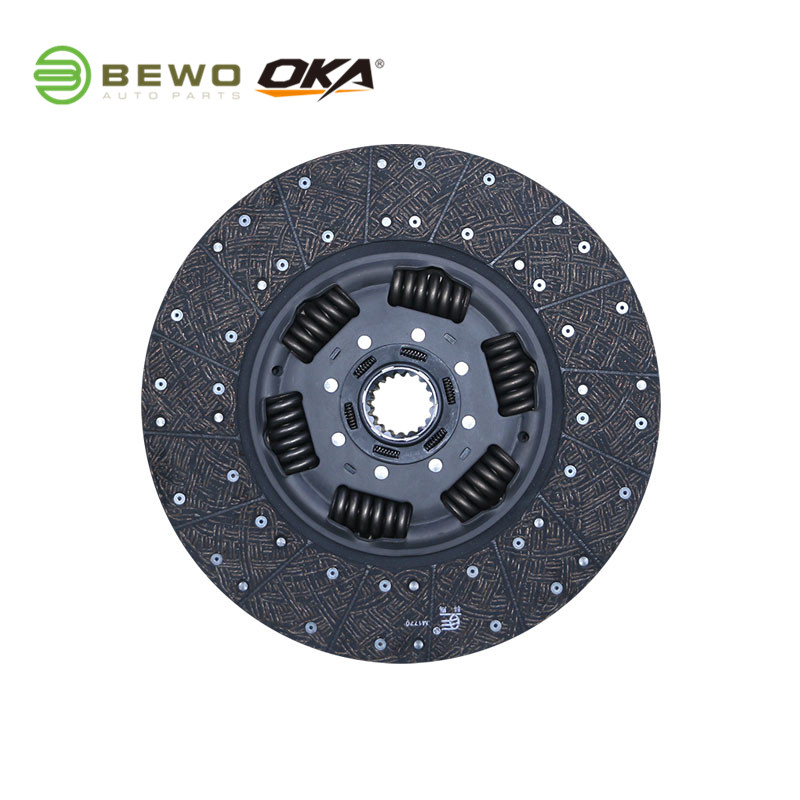
Consider specific part integrations for demanding vocational jobs. For example, evaluating a highly specified 1878002024 Clutch Disc 400mm for Mercedes-Benz Trucks ensures optimal regional performance. This specific disc handles intense torque loads in severe-duty hauling applications. The correct disc diameter and specialized facing material make a massive operational difference under stress.
Evaluating trusted cross-references helps wholesalers and repair centers secure highly reliable replacement components for diverse truck parks. Integrating a proven SACHS 1878002023 MAN Mercedes Benz Truck Clutch Disc provides excellent friction material durability, while similar rigorous standards apply when sourcing for Volvo, Scania, or Shacman applications. Maintenance professionals should focus heavily on internal damper spring reliability. Strong damper springs absorb harsh driveline shock efficiently. They protect the fragile transmission gears from torsional engine vibrations. The build quality of the central Clutch Plate dictates how smoothly the heavy truck engages under heavy loads.
Shortlisting logic should balance upfront purchase costs against historical longevity data. For parts wholesalers and fleet managers alike, the absolute cheapest replacement often costs the most over time. Focus on sourcing components offering robust warranty coverage. Proven high-mileage durability easily offsets a slightly higher initial purchase price.
You need a remarkably clear and enforceable rollout strategy. Embed driveline inspections directly into existing Preventative Maintenance (PM) schedules. Do not treat these critical components as an afterthought. Structure ensures consistency across multiple maintenance facilities and independent repair shops.
PM A (Basic Service): Check floor pedal free-play visually and listen for abnormal release noises.
PM B (Standard Service): Lubricate the internal release bearing and external cross shafts carefully.
PM C (Comprehensive Service): Perform deep visual inspections using a flashlight through the bell housing cover.
Implement a strong and responsive driver-technician feedback loop. Create standardized digital reporting tools for the entire fleet. Drivers should log subtle variations daily rather than waiting for scheduled shop time. Modern fleet software integrates these notes directly into the CMMS. Catching a slightly stiff pedal early prevents a catastrophic roadside breakdown later. Good communication bridges the gap between the road and the shop.
Operational training ensures long-term mechanical compliance. You must address the human element of mechanical wear directly. Train drivers on the severe dangers of riding the pedal unnecessarily. Improper gear skipping damages the internal damper springs rapidly. Holding a heavy truck on a steep incline using friction creates massive destructive heat. Operational driving standards must complement your mechanical shop routines to succeed.
Maintaining commercial powertrains demands a highly coordinated dual effort. Precise shop routines must align closely with disciplined driver habits. When technicians adjust linkages accurately, components last drastically longer. Routine lubrication and careful visual inspections catch expensive problems early. Driver care remains equally important to the equation.
Prioritize routine free-play checks to prevent continuous bearing engagement.
Maintain strict lubrication protocols to avoid friction material contamination.
Invest heavily in driver training to eliminate destructive shifting habits.
Source exact OEM-grade specifications based on precise torque requirements.
Fleet managers, independent repair facilities, and maintenance directors must take immediate diagnostic action. Audit your current PM checklists and software today. Verify your procurement standards demand exact operational specifications. Sourcing premium replacement parts prevents recurring and expensive shop visits. Standardizing these exact practices protects your transmission securely. It keeps your vehicles moving safely and profitably every single day.
A: Standard manual models require mechanical adjustment checks every 10,000 to 12,000 miles. Routine fleet services should always include a quick pedal free-play inspection. Self-adjusting models maintain their own mechanical clearance automatically. However, they still require detailed visual inspections through the bell housing every 25,000 miles to verify the wear indicator ring position.
A: The most common causes include a complete lack of pedal free-play. This condition prevents full mechanical engagement. Oil or grease contamination on the friction material also causes severe slipping. Additionally, weak pressure springs or severely overloading the truck beyond its GCW rating will force the assembly to slip under load.
A: Rebuilding offers immediate upfront cost savings but introduces long-term fleet reliability risks. Installing a brand-new, factory-calibrated assembly ensures exact torque matching. New components also include robust warranty coverage. For maximum fleet uptime and predictable maintenance intervals, full replacement is generally the safer, more dependable business decision.


