

Views: 0 Author: Site Editor Publish Time: 2026-03-05 Origin: Site


Every time you press the pedal, a mechanical ballet unfolds beneath you. This vital friction interface bridges your engine and transmission. It handles immense rotational energy daily. The clutch pate plays a central role in smooth torque transfer. It dampens severe drivetrain vibrations and manages extreme thermal loads effectively. However, choosing the wrong friction material can destroy your entire drivetrain quickly. A poorly matched disc often leads to premature failure. It leaves commercial fleets stranded on the highway and massively inflates your operational costs. Selecting the correct material and structural design is absolutely vital for vehicle uptime and operational safety. In this professional guide, we explore the top five material types. You will discover their ideal applications and performance limits. We will explain how to balance clamping loads and manage severe heat. You will also learn to evaluate the total cost of ownership properly. Let us dive directly into the technical details driving ultimate reliability.
Material Matters: Organic plates offer smoothness for daily use, while ceramic and sintered iron are essential for high-torque or heavy-duty applications.
Application Alignment: Matching the plate type to the specific load profile (e.g., truck clutch plate vs. passenger car) prevents premature glazing and failure.
TCO vs. Price: A lower initial clutch plate price often leads to higher long-term costs due to frequent clutch plate replacement intervals.
System Synergy: A clutch plate set must be evaluated as a unit, including the pressure plate’s clamping load and the flywheel’s surface condition.
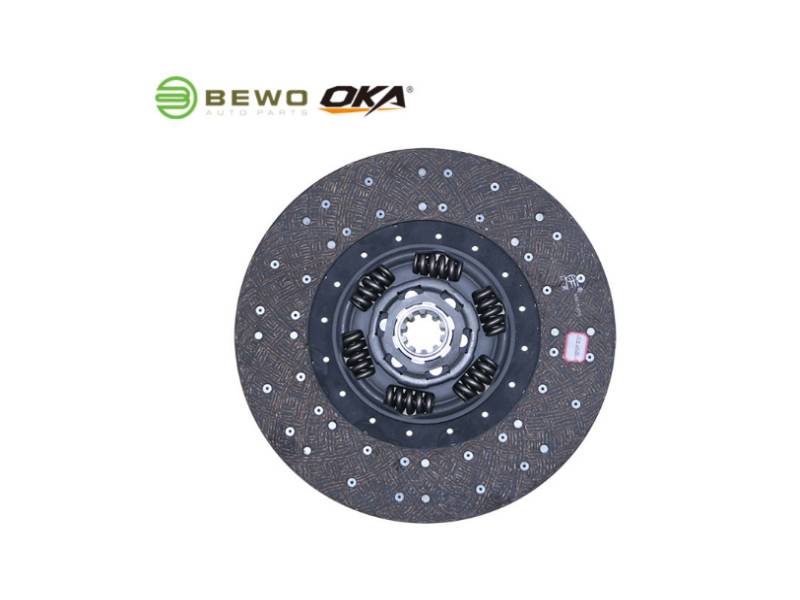
Engineers design friction discs for highly specific operational environments. We evaluate the five primary materials below. You must match them precisely to your vehicle's specific load profile to ensure longevity.
Manufacturers build organic plates using phenolic resins, metallic powder, and compounded rubber. They represent the global industry standard for everyday commuting vehicles.
Best Use: Daily driving and light commercial applications. They prioritize engagement smoothness over raw holding power.
Trade-offs: They suffer from surface "glazing" under extreme heat. Their overall torque capacity remains quite limited compared to advanced composite materials.
Ceramic options utilize a robust blend of copper, iron, tin, and graphite. They handle intense thermal abuse easily without melting or slipping.
Best Use: They excel in truck clutch plate configurations and medium-duty hauling scenarios.
Performance: They provide high heat resistance and a massive friction coefficient. Expect aggressive engagement, which significantly increases drivetrain chatter risk.
Kevlar offers incredible, unmatched durability. It features an exceptionally high burst speed designed for demanding operational environments.
Best Use: High-mileage commercial fleets rely on Kevlar heavily. These specialized vehicles require consistent, fade-free performance over very long service intervals.
Requirement: It demands a highly precise break-in period exceeding 500 miles. Rushing this critical process causes irreversible slipping issues.
Sintered iron handles the absolute highest thermal loads physically possible. It bites aggressively under extreme clamping pressure.
Best Use: They dominate heavy-duty industrial machinery applications and competitive racing circuits globally.
Trade-offs: Sintered iron acts as a highly abrasive grinding agent on flywheels. You should never use them in standard stop-and-go city traffic.
Sometimes a single large disc proves completely impractical due to space constraints. Multi-plate designs distribute massive torque across several smaller-diameter discs instead.
Best Use: High-horsepower racing engines require this configuration. It handles immense power output safely.
Benefit: They significantly reduce rotational inertia because smaller discs weigh less at their outer edges. They also increase the total friction surface area for rapid heat dissipation.
| Material Type | Heat Resistance | Engagement Feel | Primary Drawback |
|---|---|---|---|
| Organic | Low-Medium | Very Smooth | Prone to glazing |
| Ceramic | High | Aggressive | Flywheel wear |
| Kevlar | Medium-High | Moderate | Strict break-in needed |
| Sintered Iron | Extreme | Harsh (On/Off) | Highly abrasive |
Evaluating the clutch plate price is only your very first step. You must fully understand the underlying mechanical forces governing your vehicle's drivetrain health.
The pressure plate applies critical clamping force against the friction disc. Engineers classify these into three main functional designs:
Diaphragm Style: Uses a single Bellville spring. It offers a light, manageable pedal feel and smooth engagement for modern cars.
Long Style: Incorporates specialized weighted levers. Centrifugal force actively increases the clamping pressure as engine RPM climbs.
Borg & Beck: Employs heavy coil springs and wide rollers. It provides constant, heavy clamping pressure favored in older muscle cars.
Clamping force typically ranges from 5,000N to over 30,000N in industrial settings. This sheer mechanical force dictates your required friction material. High clamping loads demand highly durable composite discs to prevent immediate crushing.
Heat destroys friction components rapidly. Drivetrain systems utilize "Wet" or "Dry" configurations to manage these dangerous temperatures. Wet systems bathe the internal components in lubricating oil. They offer superior cooling efficiency for motorcycles. However, they suffer from inherent fluid drag. Dry configurations transfer power faster but require excellent ambient airflow to survive.
A stable coefficient of friction (μ) remains absolutely critical. The chosen material must maintain solid grip across operating temperatures ranging from cold ambient mornings to beyond 400°C during heavy towing.
Precision manufacturing guarantees operational longevity. Flatness tolerances must stay strictly within 0.05mm. Warped discs cause severe engagement chatter and uneven wear patterns. Furthermore, metallurgical hardness matters immensely. The disc hardness (measured at Brinell HB 180-240) directly impacts the mating flywheel surface. Matching these respective hardness levels prevents premature flywheel scoring.
Fleet managers must prioritize Total Cost of Ownership (TCO) above all else. Focusing solely on cheap initial purchase costs creates dangerous, hidden financial pitfalls.
Budget plates often fail spectacularly under peak torque loads. The "Price vs. Performance" curve demonstrates diminishing returns for ultra-cheap automotive parts. Labor costs remain the primary driver of your actual TCO. Transmission removal requires extensive, expensive shop hours. Dropping a commercial transmission can easily consume ten hours of labor. Therefore, replacing the full clutch plate set always proves vastly more economical than swapping out individual broken components.
You can usually detect impending failure before it physically strands your vehicle. Watch closely for these distinct warning signs:
Engine revving loudly without corresponding vehicle acceleration (slipping).
Sudden, unpredictable jerky movements during normal gear changes (grabbing).
Unusual, aggressive drivetrain vibrations vibrating through the floorboard (chatter).
Modern heavy-duty applications utilize integrated electronic wear sensors. These sophisticated digital monitors alert maintenance teams well before catastrophic mechanical failure occurs.
Reliability requires strict, documented quality control. Ensure your selected replacement components meet exact OEM specifications perfectly. Industrial machinery demands certified ISO/TS 16949 standards. Certified parts guarantee consistent metallurgical quality and reliable, long-term warranty support.
Even the absolute finest friction materials will fail if installed incorrectly. You must follow strict mechanical protocols during the entire assembly process.
Never install a fresh disc against a badly worn, scored surface. You must meticulously resurface or fully replace the flywheel during every clutch plate replacement. Proper alignment remains equally vital. Technicians must use dedicated alignment tools. Using a strict star-pattern torque sequencing prevents catastrophic input shaft damage during bolting.
Your typical driving environment heavily dictates the optimal material choice. Stop-and-go urban delivery cycles generate constant, punishing friction heat. They require high-quality organic or specialized Kevlar materials. Long-haul highway cycles experience infrequent shifting but demand massive clamping endurance. Driver habits also impact lifespan drastically. "Riding the pedal" burns organic materials rapidly. Conversely, ceramic setups tolerate bad foot habits slightly better but aggressively wear down the steel flywheel instead.
Every single new friction surface requires a gentle, controlled "break-in" phase. This critical period allows proper friction material transfer directly onto the flywheel. Rushing this ruins the mating surfaces instantly. Additionally, back-torque issues plague high-performance vehicles. Specialized slipper designs act as mechanical back-torque limiters. They safely prevent dangerous rear-wheel lockup during overly aggressive downshifts.
Your choice of friction material directly dictates your drivetrain's ultimate lifespan and overall efficiency. Do not underestimate this complex mechanical relationship.
Always prioritize careful, application-specific engineering over the cheapest initial purchase price.
Replace the entire friction assembly as a single, cohesive unit to minimize future diagnostic and labor costs.
Match your disc material perfectly to your operational duty cycle, whether managing urban delivery or heavy highway hauling.
Follow strict break-in procedures to ensure proper, long-lasting material mating.
Take proactive action today to protect your valuable automotive assets. Consult a technical drivetrain specialist to analyze your specific torque profile. They will help you select the precise friction technology required for maximum vehicle uptime.
A: Replacement intervals vary based entirely on duty cycles and total mileage. Long-haul trucks often exceed 500,000 miles before needing replacement. However, urban delivery vehicles experiencing constant stop-and-go traffic may require new components every 50,000 to 100,000 miles. Driver skill heavily influences this timeline.
A: A comprehensive set typically includes three primary components. It contains the central friction disc, the heavy-duty pressure plate, and the release bearing. Many modern premium kits also include a plastic alignment tool and a fresh pilot bearing for complete installation convenience.
A: Chatter usually stems from severe surface contamination, like grease or oil contacting the friction material. It also happens if you skip resurfacing the flywheel. Poor alignment during installation or choosing an overly aggressive ceramic material can also cause severe engagement vibrations.
A: Yes, upgrading improves high-heat tolerance and overall towing capacity significantly. However, you face notable trade-offs. Ceramic materials provide a much harsher, aggressive pedal feel. They also accelerate your flywheel wear due to their highly abrasive metallic composition.
A: Generally, yes. Premium prices usually reflect higher-grade composite materials like Kevlar or sintered iron. They also account for precision manufacturing processes holding much tighter flatness tolerances. Cheaper options often use inferior binders that glaze easily under extreme operating temperatures.


