

Views: 0 Author: Site Editor Publish Time: 2026-06-17 Origin: Site


Unexpected drivetrain failure is one of the leading causes of unplanned downtime and revenue loss in commercial fleet operations, turning a predictable maintenance cycle into an expensive emergency. Fleet managers and owner-operators must balance the risk of catastrophic on-road failure against the premature replacement of a functioning clutch plate. This requires accurate lifespan forecasting, technical wear diagnostics, and careful component selection.
This guide provides an evidence-based framework for evaluating clutch wear, establishing accurate mileage benchmarks across diverse applications, and selecting high-performance replacement components that align with specific operational demands. By understanding the variables that accelerate wear and the criteria for end-of-life diagnosis, you can optimize your maintenance schedules and protect your bottom line.
Lifespan Variability: A standard commercial truck clutch plate lasts between 200,000 and 500,000 miles in long-haul applications, but vocational, severe-duty, or urban start-stop operations can reduce this to under 100,000 miles.
Systemic Evaluation: Assessing a clutch plate in isolation is flawed; lifespan is intrinsically linked to the condition of the flywheel, the pilot bearing, and the truck clutch pressure plate.
Specification Matching: Upgrading to specific heavy-duty components—such as a 400mm disc—requires matching torque ratings, spline counts, and friction material configurations to the engine's output to prevent premature shear, spline wear, or slippage.
Preventive Economics: Scheduled replacement based on diagnostic criteria and physical wear measurements yields a higher ROI than running components to the point of mechanical failure, which risks damaging the transmission input shaft and flywheel.
Defining what constitutes a normal lifespan based on application is essential to establish accurate preventive maintenance schedules. The longevity of a clutch plate varies wildly depending on how and where the vehicle operates. You cannot apply a single mileage metric across an entire mixed fleet. A truck running coast-to-coast on interstate highways experiences vastly different mechanical stress compared to a dump truck navigating muddy construction sites.
Differentiating between light commercial, regional haul, and long-haul highway mileage expectations is crucial. Optimal over-the-road fleets can often push their clutch plates up to 500,000 miles. Highway cruising involves minimal shifting, which preserves the friction material. Once the truck reaches cruising speed, the clutch remains fully engaged, acting as a solid coupling between the engine and transmission. There is virtually no friction material wear during this phase.
Conversely, constant engagement and disengagement in urban environments degrade the friction material exponentially faster. Stop-and-go traffic forces the clutch to slip repeatedly. Every time the driver eases off the clutch pedal to move forward, the friction disc rubs against the flywheel and pressure plate. This generates heat and physically wears away the friction material. Regional delivery trucks often see clutch replacements between 150,000 and 250,000 miles due to this continuous cycling.
Lifespan expectations for refuse, logging, oilfield, and construction vehicles are often measured in operating hours rather than miles. In these severe-duty applications, a clutch plate typically lasts between 50,000 and 100,000 miles. High gross vehicle weight ratings (GVWR) significantly impact the thermal limits of the clutch plate. Moving heavy loads from a dead stop requires massive torque transfer, which stresses the friction material and damper springs.
Application Type | Typical Mileage Lifespan | Primary Wear Factors |
|---|---|---|
Long-Haul Highway | 350,000 - 500,000 miles | Torsional vibration, damper spring fatigue |
Regional / Urban Delivery | 150,000 - 250,000 miles | Frequent shifting, thermal cycling, friction wear |
Vocational (Refuse, Logging) | 50,000 - 100,000 miles | High GVWR launches, extreme heat, shock loads |
Self-adjusting clutches utilize technology that maintains constant pedal play, protecting the clutch plate from premature wear. These systems automatically compensate for friction material loss, ensuring optimal clamping force. As the friction material wears down, the internal mechanism adjusts the pressure plate position. This keeps the release bearing at the correct distance from the clutch brake.
Poorly maintained manual adjust clutches, however, rely on technicians to manually reset the linkage. If neglected, a manual clutch will begin to slip, rapidly destroying the clutch plate. When the free play disappears, the release bearing constantly rides against the clutch fingers. This reduces the clamping force applied by the pressure plate, allowing the disc to slip under heavy engine loads.
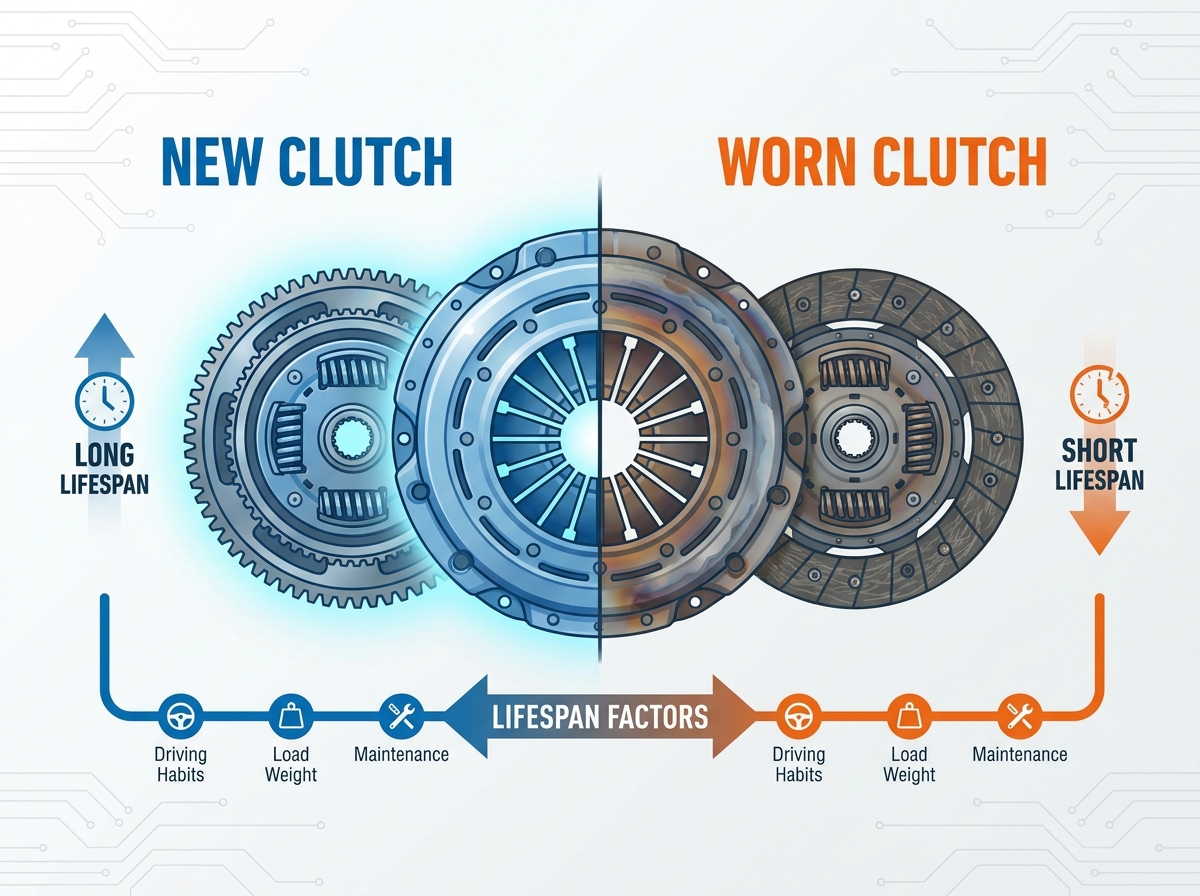
Operational realities directly impact the physical degradation of the friction material, damper springs, and spline hubs. Understanding these variables helps mitigate premature failure. Mechanics often see clutches that have failed long before their friction material is depleted, usually due to abuse or improper specification.
Driver habits play a massive role in clutch longevity. The mechanical impact of riding the clutch, improper gear selection, and skipping gears under heavy load cannot be overstated. Starting in high gears or slipping the clutch to hold a truck on an incline generates extreme heat. This heat glazes the friction material, drastically reducing its coefficient of friction and leading to permanent slippage.
Riding the Clutch: Resting a foot on the pedal partially disengages the clutch, causing continuous slip and rapid heat buildup.
High-Gear Starts: Attempting to launch a loaded truck in 3rd or 4th gear forces the driver to slip the clutch excessively to prevent stalling.
Coasting with Clutch Depressed: This puts unnecessary wear on the release bearing and pilot bearing, eventually affecting clutch engagement.
There is a direct correlation between frequent maximum-payload hauling and accelerated wear on the damper springs and carrier plate. When engine tuning or horsepower upgrades exceed the clutch's rated capacity, the risk of torque overload and mechanical shear increases. The clutch plate must be matched to the engine's peak torque output to survive heavy hauling. If a truck is rated for 1,650 lb-ft of torque but is tuned to produce 1,850 lb-ft, the standard clutch will slip and fail.
The operating environment dictates how hard the clutch must work. Mountainous terrain requires frequent shifting, engine braking, and high-load launches, all of which stress the clutch plate. Flat topography is far more forgiving. Stop-and-go traffic increases the frequency of thermal cycling, leading to micro-cracking of the friction surface over time. Dirt and dust in off-road environments can also enter the bell housing, acting as an abrasive on the friction material.
Engine misfires or worn U-joints transmit excessive torsional vibration back to the clutch plate. This vibration causes premature damper spring fatigue or failure. The damper springs in the clutch plate are designed to absorb these shocks, but excessive vibration will eventually break them, leading to severe driveline damage. You will often find broken spring retainers or loose springs rattling inside the bell housing when this occurs.
Moving from predictive mileage to physical, operational, and objective diagnostic methods ensures you replace the clutch plate before catastrophic failure occurs. Relying solely on mileage is a gamble. You need to inspect the physical components and listen to driver feedback regarding drivability issues.
Clutch slip under load is the primary indicator of depleted friction material. This occurs when engine RPMs increase without a corresponding vehicle acceleration. Shuddering or chattering during engagement is a symptom of warped components, uneven pressure plate wear, or oil and grease contamination on the clutch plate. If a rear main seal leaks engine oil onto the friction disc, it will chatter violently during takeoff.
Guidelines for inspecting through the bell housing inspection plate include checking for friction material dust accumulation and heat discoloration. Technicians should measure free play, clutch pedal reserve, and clutch wear indicator positions. A stiff pedal feel or grinding noises are signs of binding, pressure plate diaphragm spring fatigue, or a failing release bearing. Heavy black dust inside the housing usually indicates severe friction material degradation.
Measuring the minimum thickness of the clutch disc friction material against OEM wear limits is the most accurate diagnostic method. Technicians must also check for spline wear and excessive play on the transmission input shaft. If the splines are worn, the new clutch plate will not slide smoothly, causing engagement issues. Use a specialized gauge to measure the distance between the release bearing and the clutch brake to confirm proper adjustment.
Balancing upfront part costs against longevity, warranty, operational downtime, and labor costs is the core of a sound replacement strategy. Choosing the cheapest replacement part often results in doing the same labor-intensive job twice.
Criteria for evaluating aftermarket friction materials—such as organic, ceramic, Kevlar, and metallic—against OEM standards is essential. Organic materials offer smooth engagement, ideal for lighter duties. Ceramic and metallic materials provide high heat tolerance, making them ideal for heavy-duty applications, though they may engage more harshly.
Friction Material | Engagement Feel | Heat Tolerance | Best Application |
|---|---|---|---|
Organic | Smooth | Low to Medium | Light commercial, highway cruising |
Ceramic | Aggressive | High | Heavy hauling, vocational, mountainous terrain |
Kevlar | Moderate | Medium to High | Mixed fleet, regional delivery |
The 1862193105 400mm Heavy Duty Truck Clutch Disc serves as a benchmark for European and heavy-duty replacement, common in brands like Mercedes-Benz, MAN, and Volvo. The engineering benefits of a 400mm diameter disc include distributing heat effectively, providing a larger surface area for friction, and managing high torque capacities, typically up to 1900-2100 Nm. The spline profile and heavy-duty spring damping systems are crucial in protecting the transmission gears from shock loads during aggressive shifts.
Replacing the clutch plate without replacing the truck clutch pressure plate is a major false economy. Weakened diaphragm or coil springs in the pressure plate lead to inadequate clamping force, which causes a brand-new clutch plate to slip and fail prematurely. You must verify the matching surface flatters of the pressure plate to prevent uneven wear across the new friction disc. Heat checking and micro-cracks on the old pressure plate surface will instantly destroy a new friction disc.
Avoiding common installation errors that void manufacturer warranties and cause immediate mechanical failure is critical during a clutch replacement. The physical installation requires precision and strict adherence to torque specifications.
The critical necessity of machining or replacing the flywheel ensures a flat, non-glazed mating surface. Installing a new clutch plate on a glazed, heat-checked, or grooved flywheel guarantees premature failure and severe clutch chatter. The flywheel must be perfectly flat for the new clutch plate to bed in correctly. If the flywheel has hard spots from excessive heat, it must be replaced, as machining will not remove the metallurgical changes in the steel.
Mandating the replacement of all throw-out bearings, pilot bearings, clutch forks, and cross-shaft bushings during a clutch overhaul prevents secondary failures. Failing to replace these inexpensive components can require complete transmission removal later, doubling labor costs. A seized pilot bearing will damage the transmission input shaft and cause the clutch to drag, making it impossible to shift gears smoothly.
Using high-precision alignment tools during installation avoids bending the clutch disc carrier plate. Applying the exact specification and quantity of high-temperature grease to the input shaft splines prevents binding without causing centrifugal oil sling onto the friction material. Too much grease will spin off the shaft and contaminate the friction disc, causing immediate slippage.
Clean the input shaft splines thoroughly with brake parts cleaner.
Inspect the splines for sharp edges or stepped wear patterns.
Apply a light, even coat of high-temperature spline grease.
Wipe off any excess grease before sliding the clutch disc onto the shaft.
Calculating the cost of scheduled shop time versus the cost of a catastrophic roadside breakdown justifies preventive replacement. Planned maintenance avoids towing fees, load transfers, and expedited parts shipping, keeping fleet operations profitable. Replacing a clutch in the shop takes a predictable amount of time. Replacing it on the side of a highway after a failure disrupts the entire supply chain and incurs massive emergency service fees.
Schedule diagnostic road tests at the first sign of slip or hard shifting to prevent flywheel damage. Ensure technicians replace the pilot bearing, release bearing, and pressure plate during every clutch overhaul. Audit maintenance logs for vehicles approaching the 200,000-mile mark to plan for potential clutch service. Implement regular wear-indicator checks during standard preventive maintenance inspections.
A: Symptoms include slipping under load, a burning smell, high pedal engagement, gear grinding, hard shifting, and shuddering or chattering during takeoff.
A: Yes, in long-haul, highway-exclusive applications with skilled drivers and nominal loads, 500,000 miles is highly achievable. Regional, city, or vocational trucks will see a fraction of that lifespan.
A: Yes, replacing the pressure plate alongside the clutch plate is the industry standard. It ensures proper clamping force, uniform heat distribution, and prevents paying for transmission removal labor twice.
A: Its engineered 400mm diameter offers increased surface area for maximum heat dissipation, exceptional torque capacity, and high-strength damper springs designed for heavy commercial and vocational hauling.
A: Yes, partial engagement prevents the clutch from fully locking, generating extreme friction and temperatures that rapidly glaze, crack, and wear down the friction material.
A: Yes, oil or grease contamination ruins the friction material of the clutch plate, causing irreversible slipping, and requires complete replacement of the disc and pressure plate.
A: Organic offers smooth engagement and is gentler on the flywheel but has lower heat tolerance. Ceramic or metallic offers extreme temperature resistance and longevity under heavy loads but features harsher engagement.


